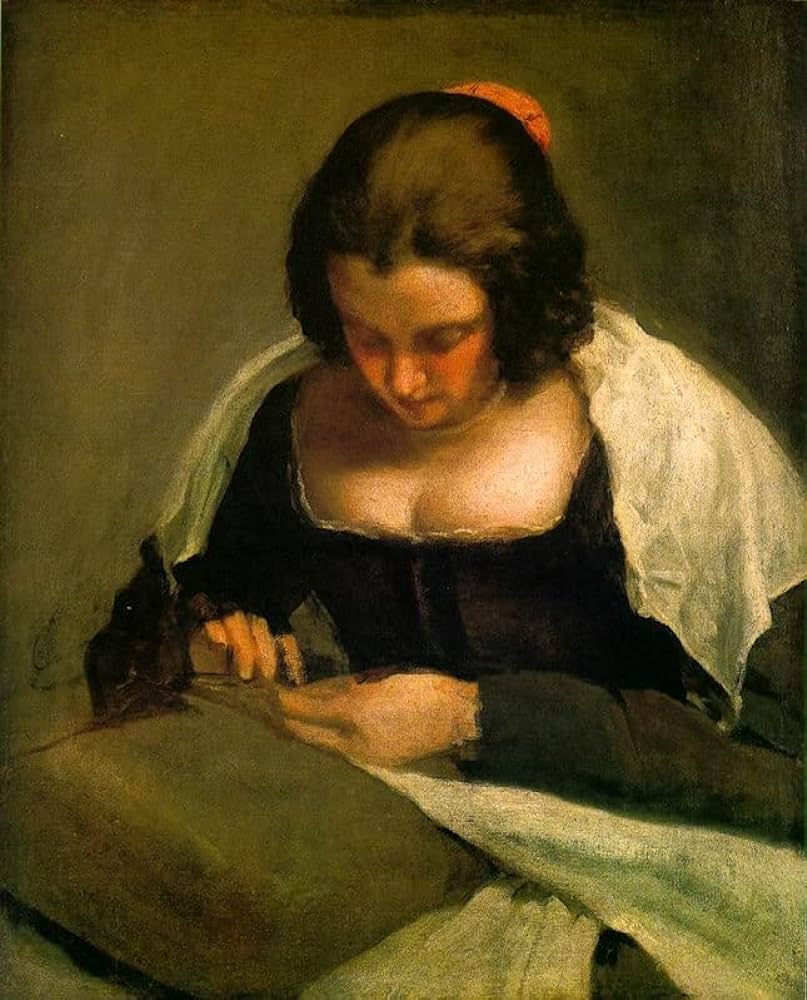
The Needlewoman (featured image) is an oil-on-canvas painting by Diego Velázquez, painted between 1635 and 1643.
The Needlewoman is a piece of art I yearn to see in real life. This is not a review, as I do not see myself reviewing art from centuries gone by, this is merely a little blog in awe and celebration of the work by Spanish Born artist, Diego Velázquez through 3 artworks that resonate with me for reasons unbeknownst to me.
According to the wikipedia description: The Needlewoman is an unfinished portrait, in which the head, modeled in light and shadow, is the most fully realized part. The arms and hands are sketched in briefly. The result displays Velázquez’s facility for portraying gesture, his method of summarily constructing the figure, and his ability to suggest a subject’s melding into the surrounding atmosphere.
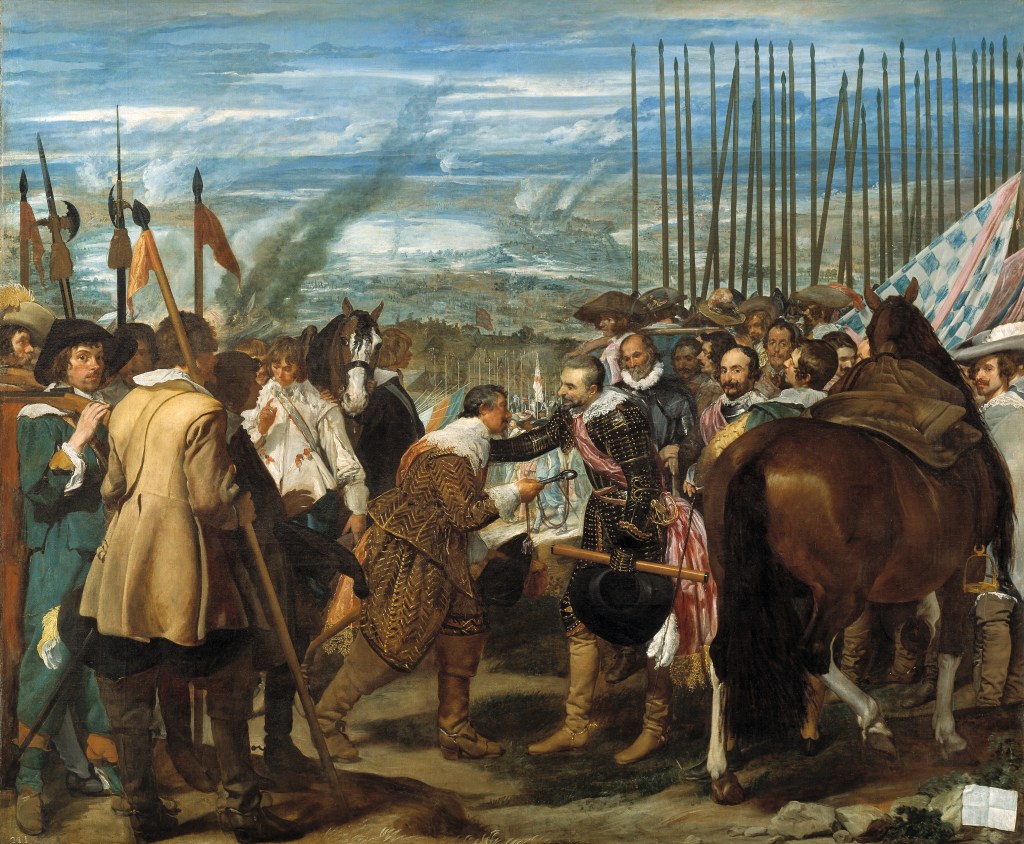
The next piece I loved seeing a couple of years back, when I was working on an clients cigar lounge art decore brief has to be “The Surrender of Breda” which depicts a military victory, the 1624 Siege of Breda, during the Eighty Years War. This war began due to a revolt against Philip II of Spain by the Seventeen Provinces, which today includes the Netherlands, Belgium, and Luxembourg.
My introduction to Diego Velázquez was perhaps through this piece, back in 2015, and it has stuck in my head for many years later.
Most recently, the piece that has haunted me since the beginning of my volunteery tenure at a local sports club till the end of the unfortunate tenure has to be Diego Velázquez’s “Portrait of Innocent X,” of 1650. There is something frightening and glaring about that art, and I shudder at the thought of how I really envision seeing it in real life.
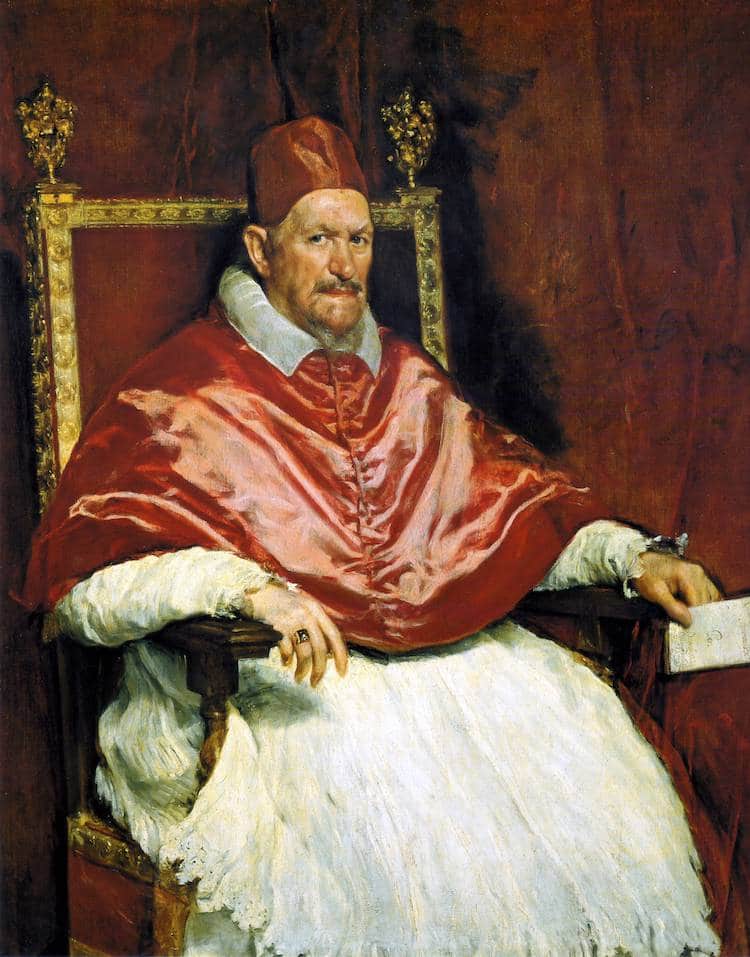
A bit about the artist & “Portrait of Innocence“ according to : MyModernMet.com
Baroque painter Diego Velázquez was a fixture of the Spanish royal court and renowned for his honest and exquisite portraits. During one of his trips to Italy, he was commissioned to paint Portrait of Innocent X. Velázquez prepared for the occasion by painting a portrait of his assistant Juan de Pareja—a Spaniard born into slavery. This piece displays the Impressionist-style brushstrokes that Velázquez would employ in the portrait of the Pope, as well as a limited color palette. A couple of years later, Velázquez freed Pareja, and he became an independent artist.
Velázquez was known for capturing the reality of his subjects without much flattery. In fact, when the pope saw the finished picture, he was recorded as exclaiming: “It’s too true! It’s too true!” Nevertheless, he accepted it, and the portrait is considered by many historians as one of the greatest portraits ever made.
A lot of realistic art haunts me so I’ll probably write about a few when they come to mind or when something happens and I’m instantly drawn to see what ever it is through the lense of a dead artistic immortalized by their work.


