

I’ve often tried to explain the concept of “Social Currency” to cricket players and even cricket executives in the amateur circuit. By this, I mean the importance of having a personal social media presence—one that is authentically their own and not just a polished image curated by their management. It’s about cultivating a personality that goes beyond their identity as an athlete and taps into who they are as individuals. This, in turn, plays a crucial role in building an overall brand.
After the inaugural SA20 Auction, a few players were picked up for surprisingly low amounts. I firmly believe that these last-minute, low-cost selections were influenced by the players’ lack of social currency, which weakened their brand appeal to teams shopping for new talent. At the time, I realized I was often speaking to an audience not yet ready to engage with the “other side” of the cricket business. Many don’t yet wish to grasp the importance of brand power off the field.
While my approach to this topic might be more common in hospitality and lifestyle industries, in the cricket world, it may have seemed too aggressive or “out of touch”. Perhaps I need to learn how to communicate these ideas in a way that resonates with this specific audience, fostering open and engaged discussions. Or maybe it’s about channeling a more balanced feminine energy—one that can be influential when wielded effectively.
But let’s get back to the main topic: What is Social Currency?
Social currency refers to the value a person or brand derives from their social interactions, particularly online, though it’s not limited to social media alone. For an athlete, social currency is the influence, trust, and engagement they build with their audience through authentic, relatable, and meaningful content, community outreach, and social visibility.
A well-recognized example of this is found within the Springboks. Coach Rassie Erasmus has managed to harness the star power of his players without dimming it. Between 2021 and 2024, we’ve seen rugby players tap into their individual social currency, using it to enhance their roles within the team while also becoming “stars” to fans and children across South Africa. This balance makes them attractive not only to global brands but also to local small businesses, driving sponsorships and collaborations.
There is an art to building one’s “Social Currency” as an athlete—an art that cannot be reduced to a “one-size-fits-all” formula. It requires the individual’s identity to find a safe space to evolve. Sharing this process with an audience is what leads to authentic brand-building.
A recent example of the positive impact of an athlete’s Social Currency is Springboks Captain Siya Kolisi visiting Magugu House and being photographed in the Xhosa Lobola Heritage Shirt, part of Thebe Magugu’s popular collection. Thebe Magugu is a young South African designer based in Johannesburg. Originally from Kimberley, he moved to Johannesburg to study fashion design, fashion photography, and fashion media at LISOF. After winning the best graduate collection, he interned and worked for a selection of designers, fashion institutions, and retailers. After 2 years of that, he began his label, THEBE MAGUGU.
Which maintains to represent : quality, novelty, and culture, while constantly seeking new ways of presenting women with clothing that both complies with and enhances the everyday. With a Sleek design ethos, forward-looking design intersects with motifs from South Africa’s storied past, providing smart, multifaceted clothes. While the Thebe Magugu brand is rooted in womens ready to wear, the inclusion of menswear items speaks volumes of the rhe designers’ eagerness to evolve in design to suit the aspirational global market.
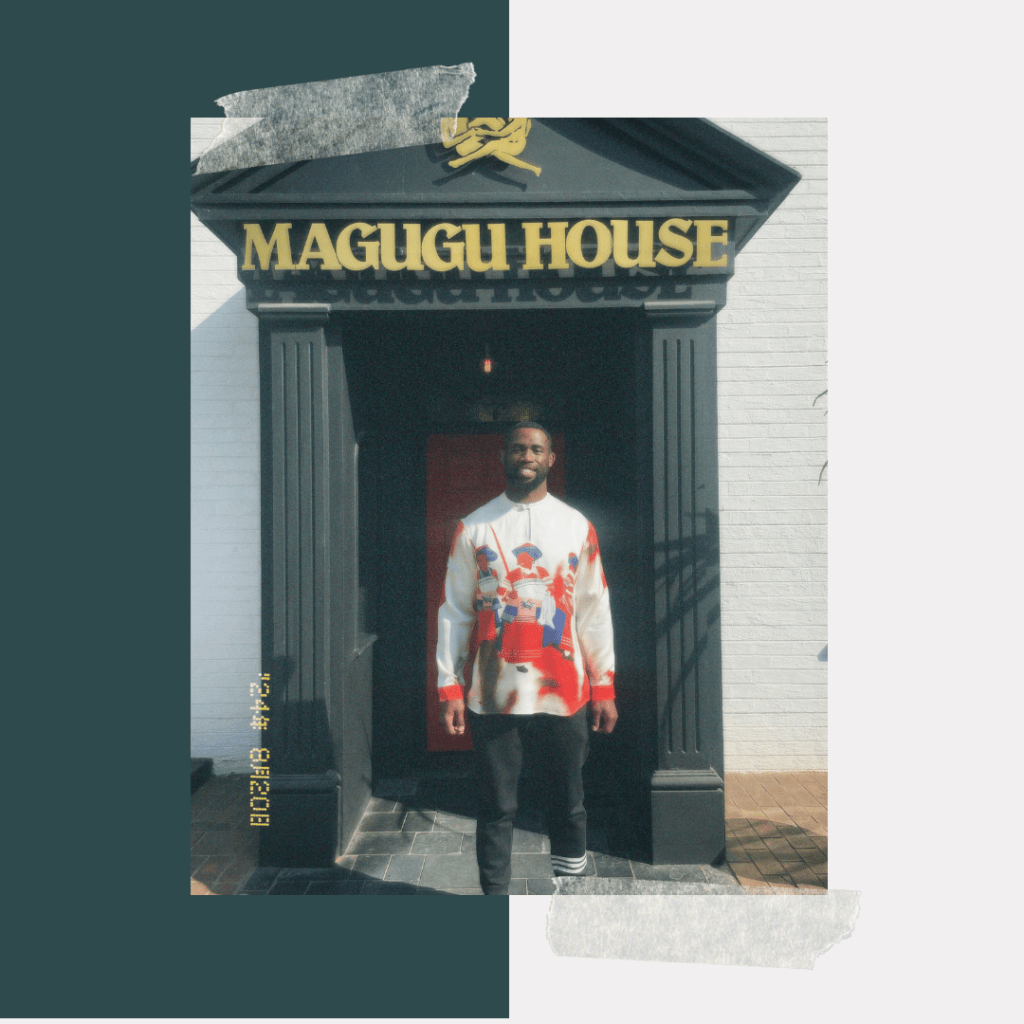
So, how does this relate to Social Currency and sport?
Siya Kolisi, much like Faf de Klerk, Cheslin Kolbe, Eben Etzebeth, and a few others in the Springboks, resonates deeply with South Africans and the assumed values that make up the tapestry of the nation. There is an authenticity in their actions on and off the field, both online and offline. There is personality even for the most awkward of the players. So, in a country where most athletes often seek the latest international fashion, maintain a performative duel around privacy, and curate a distant image, Kolisi stands out in this instance by shopping or collaborating with a local designer who in his own right has cultivated international acclaim. Additionally, his involvement with initiatives like KFC AddHope through the Kolisi Foundation showcases how social currency can create visible, meaningful impact.

Moreover, Kolisi’s influence extends beyond rugby, as seen when he and Eben Etzebeth accompanied UFC champion Dricus Du Plessis to his recent victory. Kolisi’s presence and support speak volumes about his commitment to playing for the honor of his country and supporting those who share the same competitive spirit and grit.
Siya Kolisi has accumulated his social currency through the authenticity and relatability of his journey—from humble beginnings to where he is now. His vulnerability, paired with his strength, makes him, his family, and his teammates a source of national pride.
His social currency is further amplified by the modest visibility of his wife, Rachel Kolisi, his children, and their exemplary dynamic as a “South African Family” unit of Hope. This nuanced social currency, highlighted by successes, challenges, shared experiences, and, most importantly, learnings and teachings, makes Kolisi and his teammates relatable in many aspects of life for the average South African.
I advocate for individuality in any industry but advocate more for marketing, branding, KPIs & ROI’s. I advocate for holistic development of a player because the moment you decide to play a sport, represent a team, union or country, you are in that moment a brand with nuances and areas of self branding that need to be attended to. I think if a culture of understanding that as an athlete, one becomes a brand, we stand the chance of building competitive cricketers who know that a social currency beyond the field is what attracts consistent support from the public, it’s how a fan-base is built, because just playing, is not the only talent or skill cricketers need to sharpen inorder to captivate a diverse audience.