
Now, This Is Not a Review, but if it were to be one, I would have to sit everyone down for a chat around leveraging power dynamics.
FlySafair risks sanctions due to non-compliance with local ownership laws. South African law mandates airlines be majority South African-owned, but FlySafair’s structure includes substantial foreign ownership by Ireland-based ASL Aviation. This breach, under investigation since 2022, may lead to suspension or fines unless corrected. FlySafair expressed commitment to compliance and highlighted ambiguities in the regulations. Experts suggest this case could lead to prolonged legal clarification on foreign investment limits in South African airlines.
FlySafair, now deemed “South Africa’s largest domestic airline,” is navigating regulatory turbulence due to foreign ownership laws, and facing potential sanctions that could ground its fleet. Yet, leveraging its strategic partnerships with Cricket South Africa (CSA) and expanding routes like Cape Town to Windhoek could provide a unique advantage.
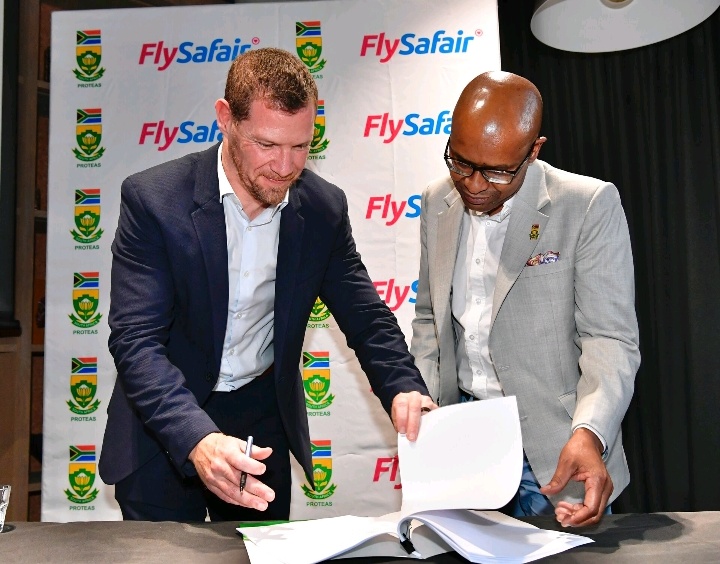
The recent partnership announcement with Cricket South Africa ties FlySafair’s brand to a national passion, promising to make cricket events more accessible for fans while bolstering travel for teams. I also think talks between FlySafair and Cricket South Africa have been in the works for a few years now, as I recall the U/16 girls team from Boland flew via FlySafair in 2023 for the CSA Youth Weeks. With a three-year commitment, FlySafair’s contributions to the cricket community are substantial. Any interruption to its operations could impact CSA’s logistics, disrupt fan travel, and affect cricket’s growing appeal among the South African public. By highlighting this mutually beneficial relationship, FlySafair could advocate for phased compliance measures to maintain its role in supporting South African sports.
In addition, FlySafair’s Cape Town to Windhoek route aligns with a trend of increasing tourism flows between South Africa and Namibia. With Namibia’s cricket profile on the rise, this route supports regional ties and opens doors for South African fans to engage with Namibian cricket. Leveraging these cultural and economic benefits, FlySafair can argue its contributions to both South African tourism and sports should be factored into regulatory decisions.
By underscoring its support for cricket, FlySafair could be strengthening its case as a vital connector of regional tourism and national pride. With strategic lobbying, it may be able to secure leniency, keeping its planes in the skies and fans connected across borders.
As this is a developing story, I’m curious to see how it unravels and will be following it closely.


