In a recent article by Daily Maverick, it was revealed that the Department of Basic Education has officially delayed the rollout of mandatory Coding and Robotics in South African schools. Citing the need to focus on foundational literacy and numeracy, the Department argues that learners must first be able to read for meaning and solve basic arithmetic problems before tackling more advanced digital subjects.
While this “back to basics” approach may be a rational pivot in a system where 81% of Grade 4 learners struggle to read for meaning, the risk is that we stall progress in equipping our youth with future-ready skills. Coding and Robotics aren’t just fancy electives, they’re tools for building logic, creativity, and confidence in an increasingly automated world.
But if the state isn’t ready to lead at scale, who can help bridge the gap?
A Blueprint in Phalaborwa
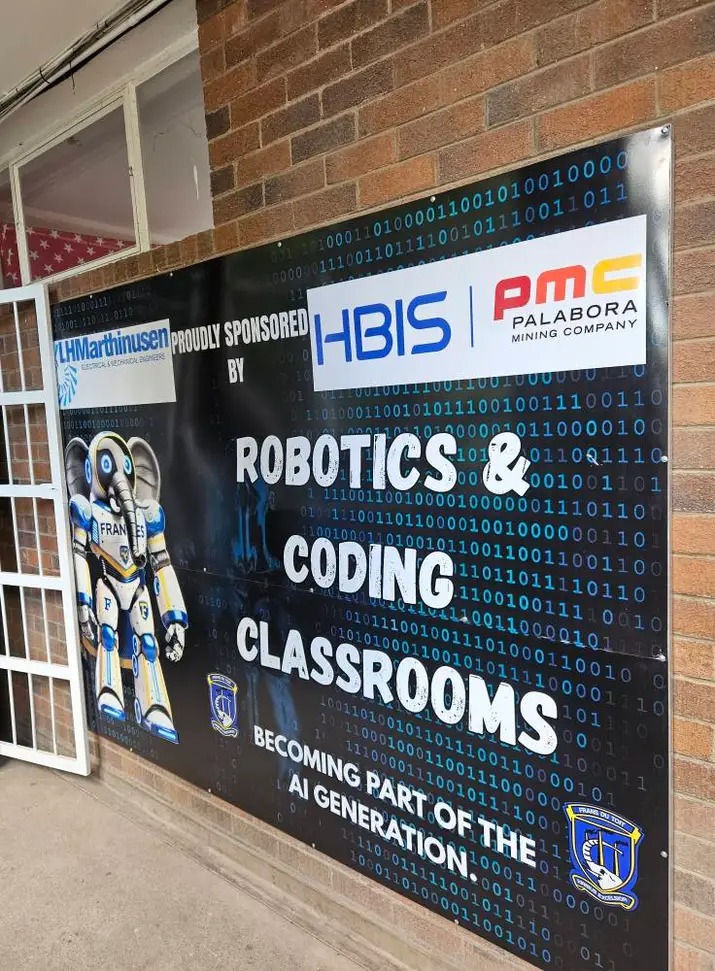
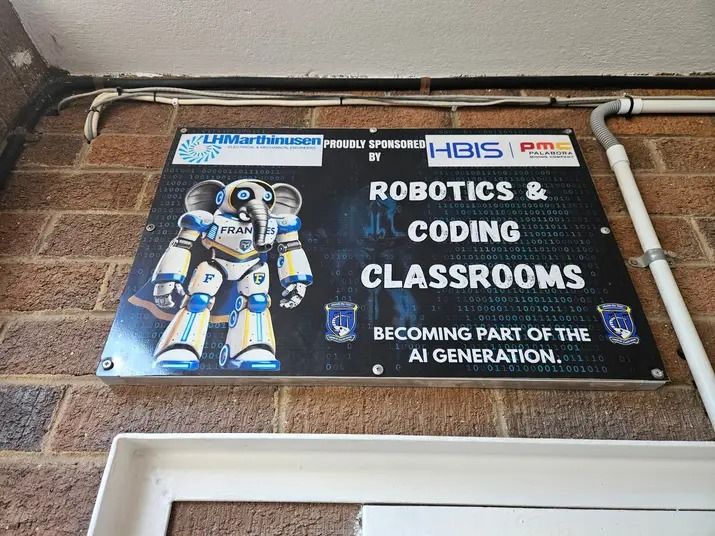
A promising answer lies in the story of Frans du Toit High School in Phalaborwa. Thanks to a collaborative partnership between Palabora Mining Company and LH Marthinusen, a brand new, fully equipped Coding and Robotics lab was launched this month, complete with smartboards, laptops, sensors, and practical training kits.
This initiative isn’t just about infrastructure, it’s about reimagining the role of industry in shaping inclusive digital futures. In a town where mining has long been the heartbeat of the local economy, this investment signals a shift: from extractive economies to ones that empower and uplift through education.
The project’s success offers an instructive model:
- Corporate funds + community-driven intent = educational equity
- Local context + future-focused tech = empowered learners
A Call to Corporate South Africa
As government takes time to recalibrate its readiness, the private sector can, and must, play a more prominent role. Mining companies, financial institutions, telecom giants, and tech firms all have a stake in the digital pipeline of tomorrow. But the investment needs to be deeper than CSI checkboxes; it must be long-term, inclusive, and rooted in real community upliftment.
Phalaborwa shows us what’s possible when corporates invest in the schools on their doorstep, not just as sponsors, but as partners in South Africa’s developmental journey.
From Delay to Opportunity
Instead of seeing the national delay as a setback, perhaps it’s a window for decentralised innovation, where NGOs, universities, corporate actors, and communities come together to create hubs of excellence in the interim. By the time national policy catches up, we could already have a network of pioneering schools like Frans du Toit, proving what’s possible when resources meet readiness.
What would it take for every mining town, every bank’s rural branch, or every regional data centre to adopt a school and co-create a Coding and Robotics lab? What if corporate social responsibility became a shared mission to code the future, one school at a time?
South Africa may be delaying, but our kids can’t afford to wait. Let’s build the future with them, for them, starting today.


