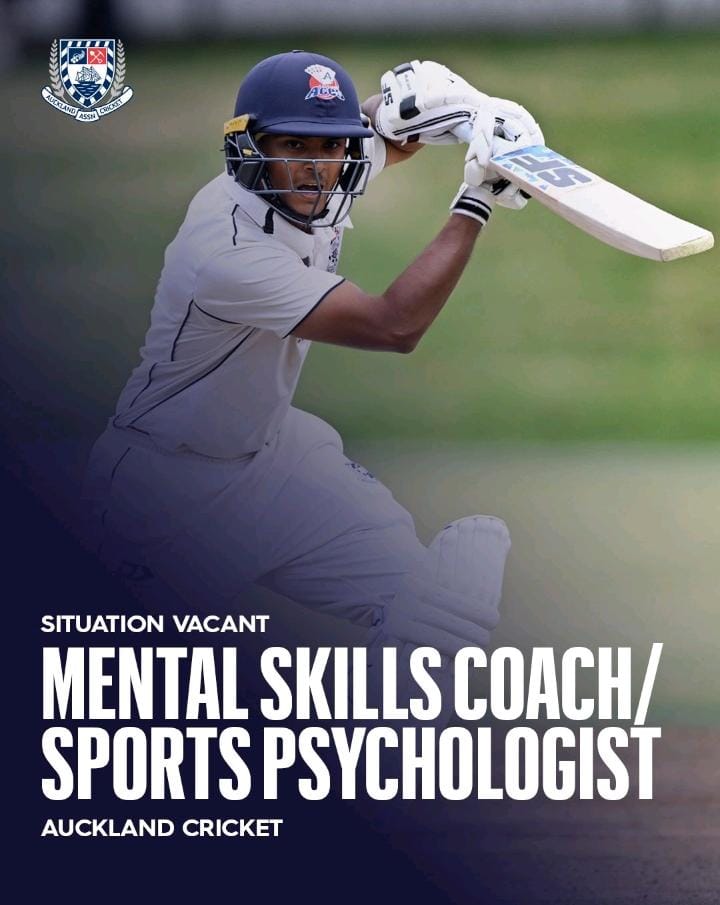
This vacancy advertised by New Zealand Cricket for a Mental Skills Coach/Sport Psychologist is a clear indicator of how seriously high-performance teams are taking mental health and psychological resilience, and rightly so.
My thoughts on having a mental health/sport psychologist in sports/cricket teams and why it’s a brilliant move:
- 1. Mental strength is as important as physical skill: In elite sports, the margin between winning and losing often comes down to mindset. Confidence, focus, handling pressure, and bouncing back from failure are all psychological skills.
- 2. Athlete well-being equals performance sustainability: Athletes are not machines. Managing stress, anxiety, burnout, and personal challenges is essential for longevity in any sport.
- 3. Helps normalize mental health support: Having psychologists embedded within teams sends a powerful message: “Mental health is not a weakness; it’s part of being professional.”
- 4. Team culture and cohesion: Mental skills coaches often help build stronger interpersonal relationships, resolve conflict, and enhance leadership within teams.
- 5. Performance under pressure: Whether it’s the final over in cricket or match point in tennis, sport psychologists prepare athletes for those moments through visualization, routines, and mental toughness training.
Teams like Australia, India, and the English football Premier League are increasingly investing in sports psychology. It’s becoming a core part of athlete development.
Here at home, Cricket South Africa, in August 2023, rolled out a nationwide mental wellness initiative, and claims to have trained over 200 coaches across their grassroots Hub programme. These coaches are being equipped to support players and communities facing mental health and addiction challenges, not just on the field, but in broader social contexts.
The initiative is structured over four years, and CSA suggests that it has already expanded into provinces like Gauteng and the Western Cape.
Its aim: to help coaches address mental well-being in underprivileged communities and strengthen the pipeline.
While I do not recall such an initiative reaching the hub I was formally chairing, perhaps that was clouded by the many administrative issues we had inherited and were repairing. But I think it would have been a great initiative to have access to given the amount of socio-economic challenges that emotionally and mentally take up so much capacity from productivity and progress of both players and coaches.

At domestic franchise level, the Central Gauteng Lions (the DP World Lions) hired Lloyd Bemelman, a sport psychologist, as part of their medical team. His role covers all levels, from youth through Women’s and Men’s squads, all aimed at improving mental skills, managing performance anxiety, and supporting culture and confidence.
And just to bring it back to Cape Town and the overall business of cricket, legendary South African, Paddy Upton has suggested that each national team should intentionally embed mental well-being support, perhaps via integrated sport psychologists or mental conditioning experts to match the rising demands and pressures of global cricket.
So, while CSA claims to be making progress through its suggested community education, there’s a strong case to be made for formalizing a role for mental health professionals within the Proteas setup mirroring moves being made globally.


