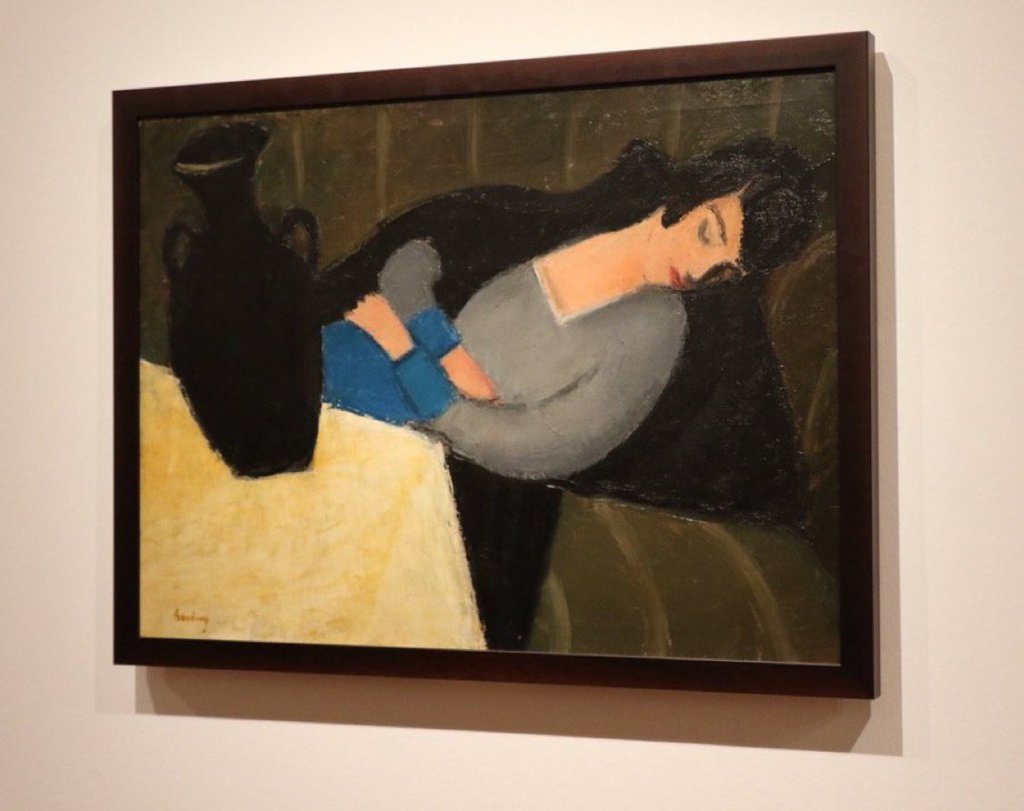
This is not a review, but if it were to be one, I would talk about me landing onto an art lore only to fall into a rabbit hole about it, but most importantly, I would gleefully unpack the epic story of a Hungarian art piece that was spotted by chance In 2009 when a Hungarian art historian named Gergely Barki sat down to watch Stuart Little with his daughter. So what was meant to be a simple Christmas Eve movie night turned into a moment of absolute cinematic serendipity: because righr there, in the background of the 1999 Little family’s living room, hung a painting Barki had only ever seen in a grainy black-and-white photograph from 1928. It was “Sleeping Lady with Black Vase,” a long-lost work by Hungarian modernist Róbert Berény.
The painting’s quiet appearance in the 1999 family film sparked one of the most unusual art recoveries in recent memory, which now occupies a fascinating space between lore and rabbit hole.
The Lore of the Stuart Little Painting

By now, the story has taken on the feeling of art world folklore: as a $40 painting sold at a San Diego charity auction in the 1990s; passed from collector to antique store to film set; appearing unknowingly in Stuart Little and Family Law; and ultimately getting recognized by an eagle-eyed historian over a decade later.
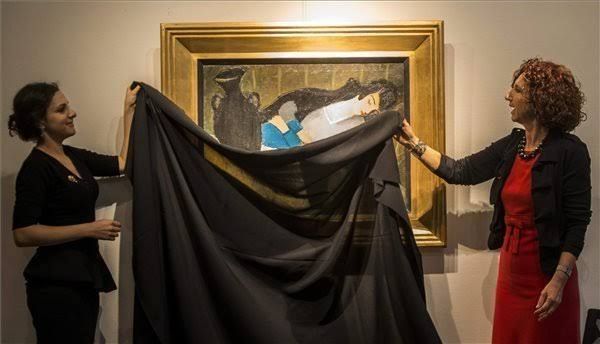
Barki’s search for the painting reads like a script itself, sending over 40 emails to production companies and crew members, meeting the set designer who owned it in Washington, D.C., and using a screwdriver borrowed from a hot dog vendor to inspect the frame and confirm its authenticity. The painting was later sold at auction for $285,700 to a Hungarian collector.
These details now form a well-circulated tale, a sort of modern myth. They are lore, the kind of cultural story that’s passed around not just because it happened, but because it feels like it couldn’t possibly have. The painting and its journey through time, spaces, and systems is no longer just a piece of art on canvas, I really do feel it’s a symbol of what gets lost, what gets found, and how stories need to be told, and how people need to be educated about art and how it sticks with us across life’s ever evolving chapters.
The Rabbit Hole It Opens:
So, for those who hear this story (I saw it on my reddit thread) and can’t stop thinking about it, the painting has become something else: a rabbit hole. You start with the Stuart Little trivia, and suddenly you’re researching Berény’s influence on Hungarian modernism, the post-war fate of European artworks, or other lost paintings that ended up in strange places. Maybe I’ll be watching the movie again, pausing at every scene. Maybe I’m now tracking Berény’s catalogue raisonné and wondering what else Hollywood has unknowingly used as background gold.
This is the difference between knowing the tale and being pulled into its orbit. The Lore gave me the legend. The rabbit hole gives one the obsession. When Lore Becomes a Rabbit Hole
What makes the Berény story so compelling is that it’s both lore and rabbit hole. It’s the kind of cultural tale we remember and retell, as I’m doing now, and it’s the kind of story you can’t help but dig deeper into once you hear it. I think it blurs the boundary between the casual knowledge we carry and the active curiosity that drives us to learn more.
It also reminds us of how media, memory, and mystery intersect in strange, cinematic ways. A painting lost to time, quietly sitting behind a talking mouse, waiting for the right eyes to see it.
And once you do? You’re already falling. And that’s where I find myself… short fun facts :
- The work, “Sleeping Lady with Black Vase,” is by Hungarian avant-garde painter Róbert Berény (1887–1953).
- The painting was indeed sold for around $40 at a charity auction in San Diego in the 1990s.
- It was later resold to an antique store for $400 and then purchased by a set designer for Sony Pictures for $500, to be used in the film Stuart Little.
- The painting was eventually auctioned in 2014 for $285,700 to a Hungarian collector, far exceeding its reserve price.
So that is pretty much what I needed to unpack, but for the local art scene, Iziko Museum is running a women’s day free entry promo to all Iziko museums.
Listen | A Curatorial Call for Presence at Investec Cape Town Art Fair 2026


