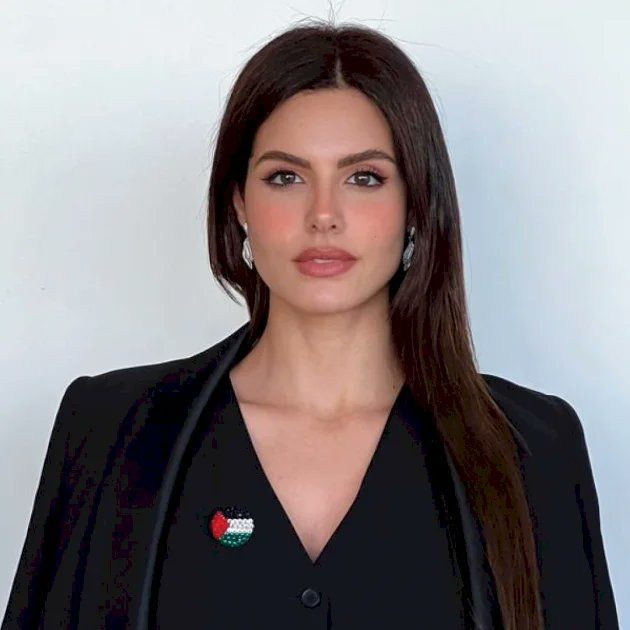
When Nadeen Ayoub walks onto the Miss Universe stage in Thailand this November, she will be carrying much more than her own ambitions. She will be carrying a nation. For the first time in the pageant’s 74-year history, Palestine will have a contestant, and that contestant is stepping into an arena where beauty, politics, and identity collide in ways the crown itself cannot contain.
Ayoub’s achievement is a milestone, but it is also layered with tension. Pageants, particularly those as global as Miss Universe, present themselves as apolitical spaces, a celebration of glamour, grace, and global unity. Yet for Palestinians, who are often denied the recognition of statehood, even the mere act of appearing on stage with a sash that reads Palestine is political. Representation becomes resistance.
Crowned Miss Palestine in 2022, Ayoub has already tested the boundaries of this visibility. At Miss Earth that year, she not only reached the top five but was awarded the title of Miss Earth Water. Her success was groundbreaking, but it also underscored how rare it is to see Palestinians celebrated outside of the frames of conflict and humanitarian crisis. For many watching, Ayoub’s presence alone disrupted global perceptions, insisting that Palestinians can also be associated with beauty, creativity, and excellence.
Still, Ayoub has never shied away from acknowledging the weight of timing. She has said openly that she once delayed international participation out of respect for the ongoing humanitarian catastrophe in Gaza, fearing that her spotlight might draw attention away from urgent realities. That hesitation reveals the double bind she faces: to participate risks accusations of distraction, while to remain absent risks continued invisibility. This is the politics of representation, the reality that, for Palestinians, even joy and achievement must negotiate with grief and erasure.
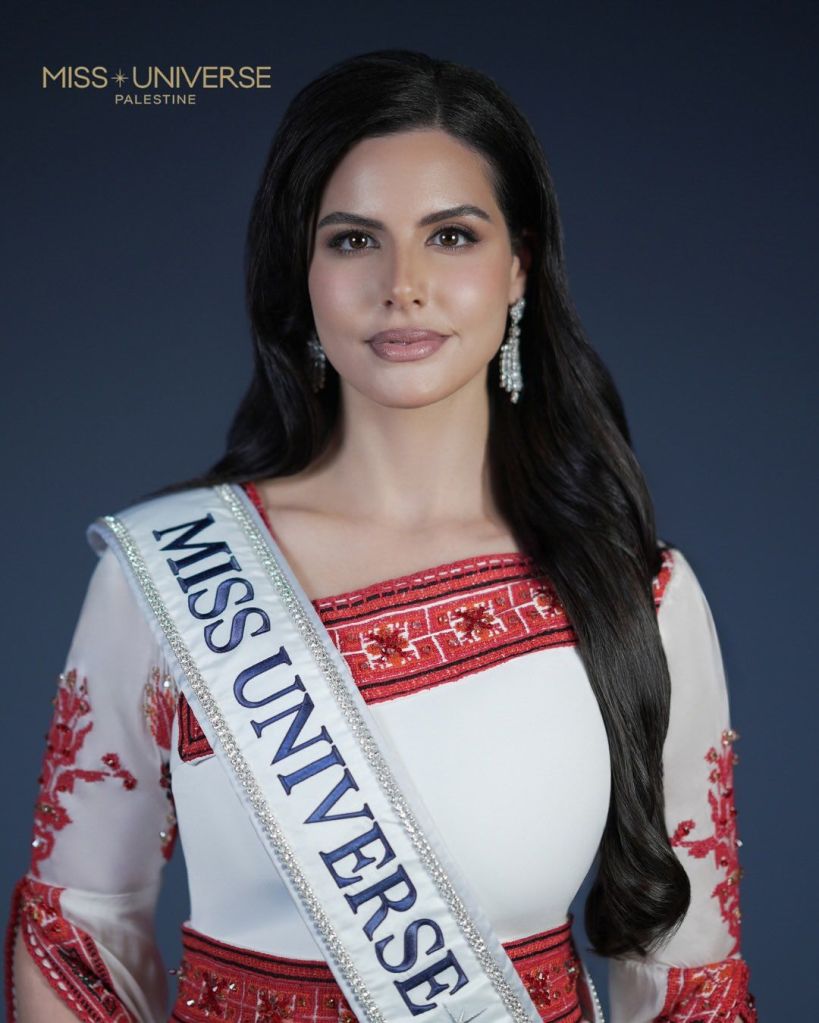
Yet Ayoub has reframed her platform not as escapism but as amplification. By taking Palestine into Miss Universe, she asserts that visibility is itself a form of advocacy. Her presence says: Palestinians are not faceless victims; they are educated, creative, resilient people who deserve to be seen in the fullness of their humanity. It is a powerful reminder that identity can not only be defined by struggle, even if struggle shapes it.
The symbolism extends beyond the sash. Ayoub has pledged to highlight Palestinian designers on stage, weaving cultural identity into the global gaze of couture. In doing so, she aims to transform what is often dismissed as spectacle into a subtle act of political storytelling. Every embroidered gown, every accessory rooted in heritage, should become a declaration that Palestinian culture endures, stitched into the very fabric of global fashion.
But representation is never simple. While many will celebrate Ayoub’s historic role, others will question whether the politics of beauty pageants can ever fully hold the gravity of a national struggle. Pageantry, after all, thrives on polished narratives, and Palestine’s story is anything but polished, so perhaps that is precisely why Ayoub’s milestone matters. It forces us to have uncomfortable dialogues about who gets to be visible on global stages and under what conditions.
In the end, Nadeen Ayoub’s participation in Miss Universe is less about the crown and more about the conversation. She stands as a reminder that even within spaces designed for glamour and spectacle, there is room, and sometimes, a responsibility to complicate the narrative. By stepping into that spotlight, she is making Palestine visible in a way that can not be erased, even if it unsettles the very idea of what a beauty queen is meant to represent.