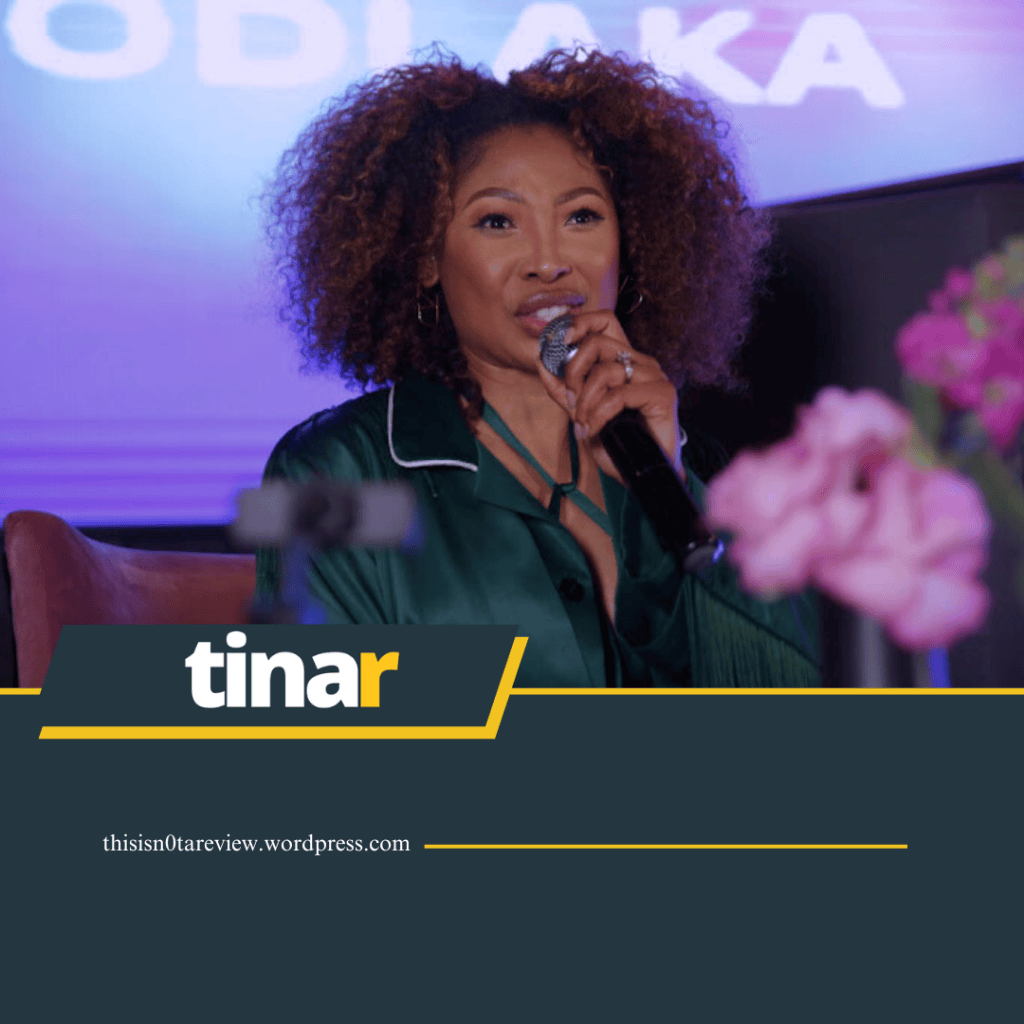
We have all seen how fast conversations unfold online. A single remark can ignite outrage, draw lines across communities, and leave brands scrambling to control the fallout. The recent incident involving actress and designer Enhle Mbali at the announcement event of her Carlton Hair collaboration is a clear reminder of this.
During her partnership launch with the brand, Mbali referred to her hair as “k*fir hare,” a deeply loaded slur historically used to demean Black people. A clip of the remark spread quickly across social media, sparking hurt, anger, and debate about language, identity, and accountability.
Carlton Hair traditionally associated with caucasian haircare but now venturing into ethnic hair, found itself caught in the careless storm on the very day it was celebrating its first black celebrity partnership. It was a preventable misstep, one that highlights how speechwriting, preparation, and cultural sensitivity must be built into any modern brand collaboration.
Too often, brands respond reflexively: terminate or pause the contract, issue a press release, and move on. While that may satisfy short-term PR needs, it misses a deeper opportunity: to turn controversy into a space for public learning and genuine trust-building.
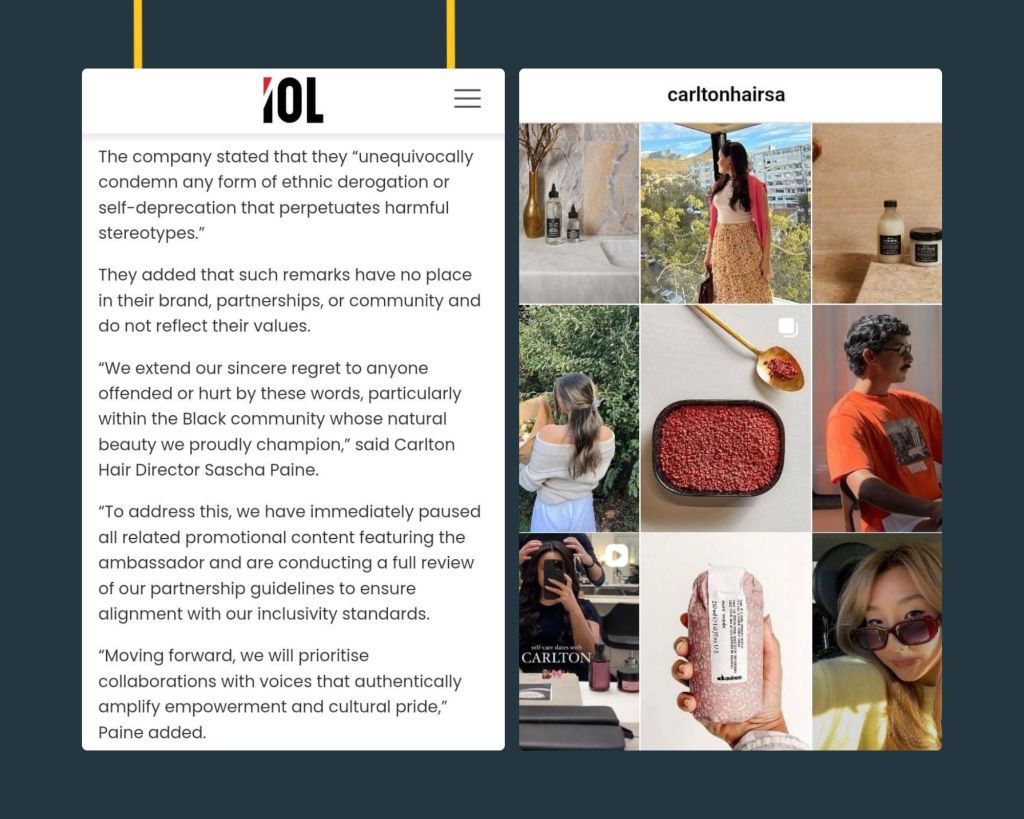
Reports suggest Carlton Hair opted for a passive stance, responding to individual media queries without issuing a formal press statement. Imagine instead if they had leaned into the moment with courage: issuing a clear, sincere acknowledgement of harm, and then inviting their ambassador, consumers, and staff into a facilitated dialogue about why certain words wound and how shared understanding can be built.
In their IOL statement, the brand pledged to prioritize ambassadors who “authentically amplify empowerment and cultural pride.” A noble sentiment, but without substance, such promises risk becoming empty slogans. What does “authentic amplification” mean in practice? Will Black voices be truly centered or merely tokenized? The public is watching closely.
This is where equity-led strategy matters. Brands can not afford to simply retreat into damage control. Times have changed, they need to build structures that prevent harm while also preparing them to respond with integrity when missteps occur.
One path forward is engaging experts who do this work daily. Demi Phasha (see profile here) is an eclectic strategist whose practice blends trauma-informed facilitation, indigenous wisdom, and gender-aware approaches. Demi designs and implements programs that move brands beyond “ticking boxes” and into healing-centred transformation. Their participation and facilitation in workshops create rigorous, safe spaces where apology becomes a starting point, not the end of the press cycle.
Yes, cutting ties is quick. But true accountability, especially in South Africa’s context, means sitting with discomfort, listening, learning, and choosing better next time. In a culture eager to cancel, the brands that rise will be those that choose education over optics, growth over silence, and healing over haste.
By engaging voices like Demi Phasha, Carlton Hair and others in the industry would not only repair trust, but also get to set a new standard for responsible influence, one where partnerships embody real empowerment and cultural pride, not just marketing language.


