
When Pick n Pay CEO Sean Summers took to the podium warning about “the vacuuming of South Africa’s disposable income by online gambling”, it sounded like a bold, necessary intervention. A leader speaking truth to a national crisis. A call to protect consumers. A plea for regulation.
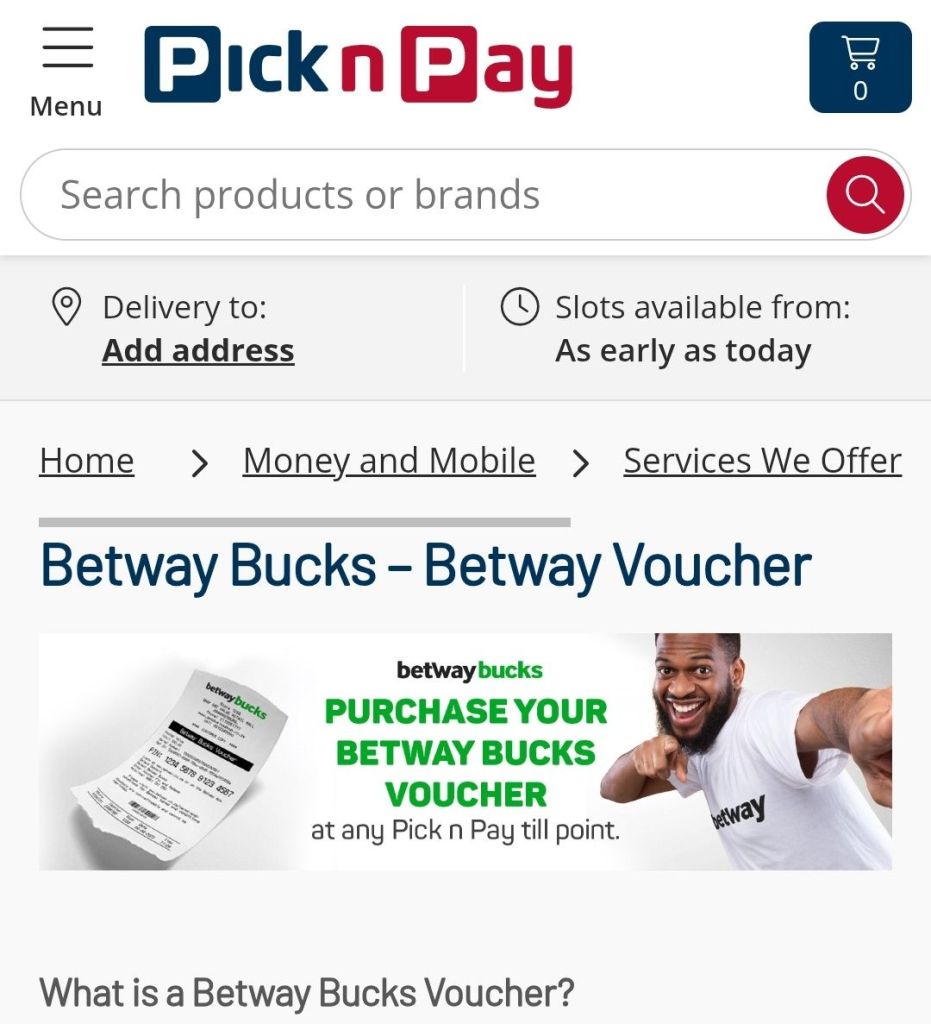
But then, you open Pick n Pay’s own website and see… Betway Bucks vouchers being proudly promoted at the till point.
The contradiction writes its own headline, because we exist in a country where R70 billion reportedly left household pockets for gambling platforms in one financial year, Summers’ concern is justified. But the optics? They’re messy. Because while condemning the societal fallout of gambling, Pick n Pay is actively facilitating it too, offering frictionless access to the very betting ecosystem Summers says is destabilising grocery budgets.
The Moral High Ground… With Betting Slips at the Till. South Africa’s gambling surge is not imaginary. The National Gambling Board recorded R74 billion in gross gambling revenue in 2024–2025, a staggering 25.7% leap, and much of it fuelled by online betting disguised in a legislative grey zone and the massive targeted marketing campaign weaved into “sponsorship initiatives“. And yes, with unemployment, rising food prices, and shrinking household budgets, gambling often functions as both hope and escape, when people should just use hiking & walking as a form of escapism.
Summers positioned this as a national emergency, likening gambling advertising to the once-glamorous cigarette era that required a national clampdown.
But unlike tobacco, betting isn’t happening on the margins. It’s happening on supermarket shelves, including his.
This is perhaps the tale of a Retail Giant Caught Between Profit and Principle. Pick n Pay is not alone. Most major retailers sell betting vouchers under the banner of “money and mobile services.” It’s become part of a new convenience economy. One-stop shops. Airtime, electricity, Lotto, and now betting top-ups.
But when your CEO publicly admonishes the industry, a question emerges:
Can you meaningfully critique a system you profit from?
I wouldn’t say this is about villainising Pick n Pay, it’s about highlighting how deeply entrenched gambling culture has become. Even the institutions’ warning about its dangers are entangled in its revenue streams.
The Bigger Picture: A Nation Addicted, A Market Unregulated Regulators are scrambling:
- The National Gambling Board aims to restrict youth-targeted visuals and influencer-led promos.
- Industry watchdogs want ad disclaimers, age-gating, and tighter digital restrictions.
- Parliament is evaluating fines and suspensions for offenders.
But enforcement is thin. Illegal platforms multiply. Ads flood stadiums, timelines, sports kits, charity events, empowerment events, Google ads, and gaming apps. And now, even trolleys share space with betting vouchers.
So What Now?
Summers is right: gambling is draining South Africa’s economic resilience. But South Africans are also right to question how retailers, including his own, help normalise the habit.
The irony isn’t incidental. It reveals the complexity of a country battling social issues with one hand while enabling them with the other. And it raises a bigger, more uncomfortable conversation about the ethics of retail giants in an economically fragile society.
If Pick n Pay truly wants to champion consumer protection, maybe the change shouldn’t start with ad bans.
Maybe it should start at the till.


