This is not a review, but if it was to be one, I would say we do not shame politicians and union leaders enough and I would proceed to unpack the many opportunities we had as a public to call out their ongoing abuse of public experience and on the ground dispositions. Allow me a moment to land with this one….
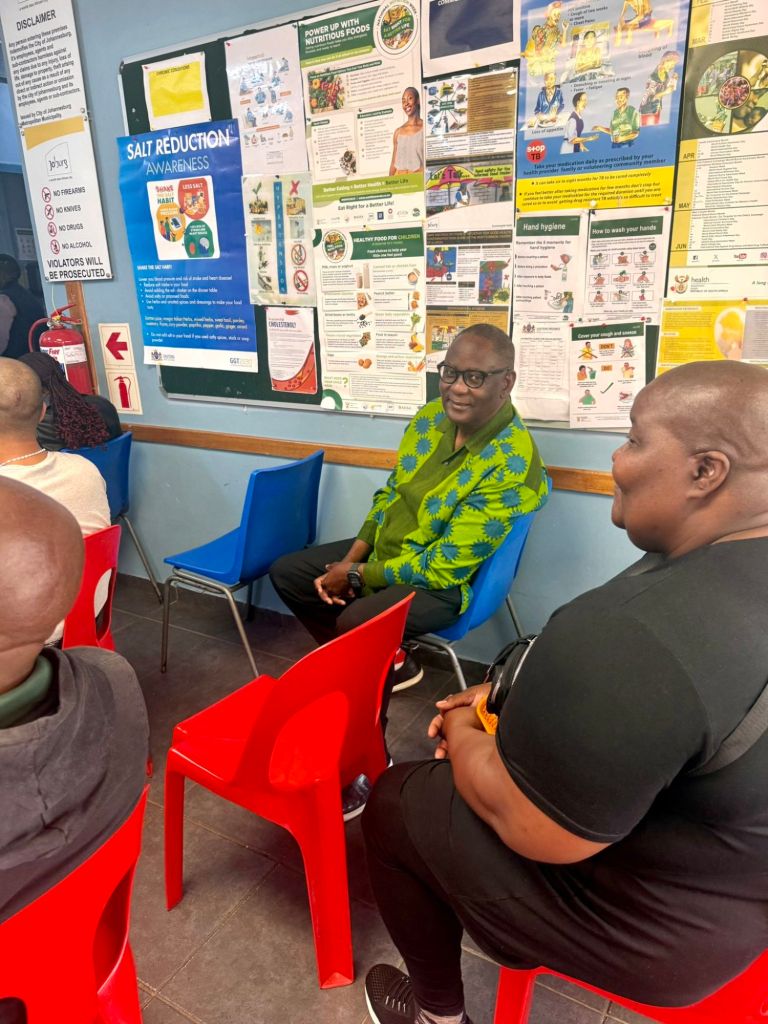
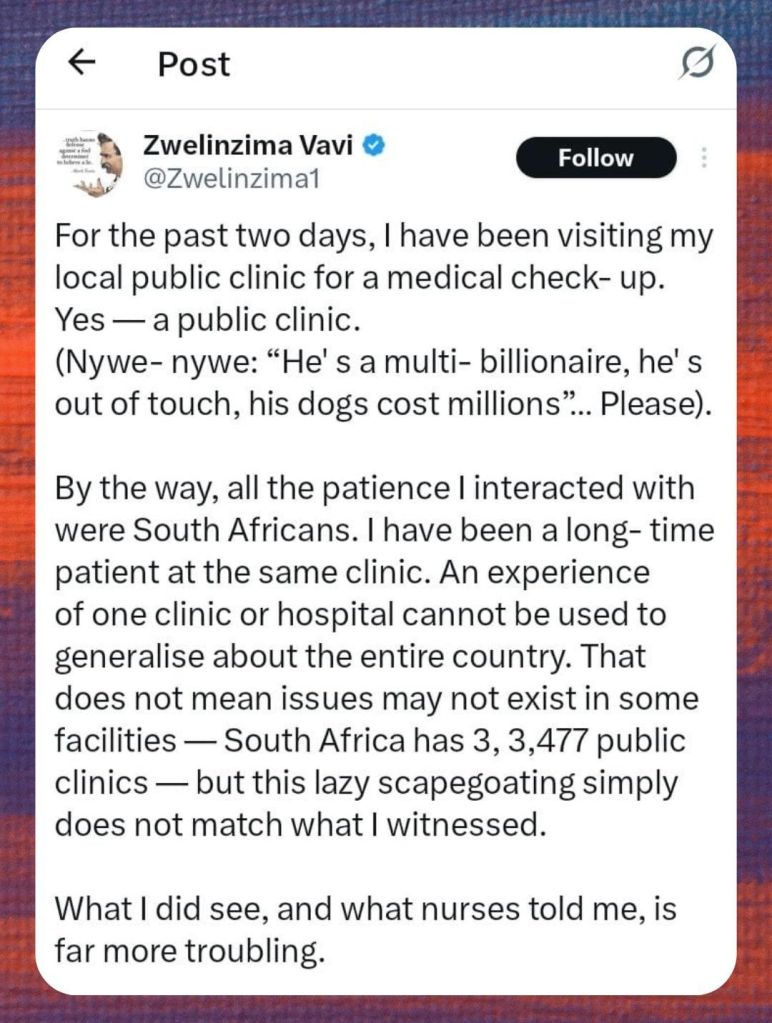
In a recent social media public exchange, Zwelinzima Vavi published a tweet that led to a him responding to criticism about his observations at a single healthcare facility using language that many found dismissive. His use of the phrase “nywe-nywe”, intended, perhaps, to mimic or mock opposing views, wasn’t just an unfortunate rhetorical choice. It reveals a deeper, more troubling pattern in how some South African leaders engage with the public.
For someone whose role is rooted in public service and representation, the tone was not harmless. It was condescending. And it speaks volumes about the leadership culture we continue to navigate and allow to exist.
Mockery as a communication strategy is not harmless: in black communities “Nywe-nywe” is not neutral slang. It carries a gesture: the rolling of eyes, the brushing aside, the suggestion that opposing voices are childish, hysterical, or unworthy of serious engagement. When an ordinary citizen uses it, it may land as everyday banter among people who are familiar. But when a public figure uses it to frame criticism, the implications shift dramatically.
It signals that:
- dissent is noise, not input;
- disagreement is immaturity, not engagement;
- and public frustration is irritation, not evidence.
Leaders don’t get to infantilise the public and still claim credibility.
Zwelinzima Vavi’s approach is a familiar tone in South African leadership, especially among male leaders, his tone is not an isolated incident. It sits within a long lineage of black South African male leaders who demand respect while offering little of it in return. Male figures in authority often use exaggerated casualness to appear relatable, but when women or youth mirror that tone back, it is recast as disrespect or insubordination.
The irony is stark: because the same male figures who weaponise humour and familiarity would never tolerate those tools being used on them.
This dynamic is especially insidious in a country where women and children routinely face dismissal, condescension, and violence with anti-GBV campaign headed by these very same people, which end up as performative gestures instead of genuine consideration. Leadership that normalises belittling language doesn’t operate in a vacuum, it reinforces a cultural norm that already harms those with the least power.
This Is Not A Review (TINAR) will officially debut as a full digital magazine on 10 February 2026, If you’re interested in collaborating, contributing, or partnering with us, we’d love to hear from you. tinar.wp@gmail.com
This level of public service requires professionalism, not performance. South Africans are facing a collapsing healthcare system, staggering inequality, GBV and deep public frustration. In that context, language matters. Tone matters. Respect matters.
Dismissing nationwide concerns with a flippant phrase, especially when based on a two-day visit to a single facility, comes across as self-centred at best and contemptuous at worst. Leadership in public service requires humility, seriousness, and an understanding that one’s personal snapshot does not invalidate the lived realities of thousands.
When a representative of workers, citizens, and communities resorts to mockery, it cheapens the discourse and erodes public trust. People expect accountability, not theatrics.
Tone is not a trivial critique, It’s about power. Some will argue that focusing on language is nitpicking. It isn’t, because language is where power leaks out. How leaders speak to the public reveals how they think of the public.
Mockery from the top creates permission for mockery from those below. Dismissiveness in leadership invites dismissiveness in institutions, and the disrespect trickles down, often landing hardest on those who are already dismissed: women, youth, the working class.
The danger is not the slang itself.
The danger is a leadership culture that uses derision as a shield against accountability.
South Africans deserve better than leaders who talk down to us. And I don’t think South Africans are unreasonable for asking for that. how Zwelinzima Vavi worded that tweet implies the South African public is childish and whiny. South Africans are not “nywe-nywe-ing.” They are expressing frustration with a system that is failing the nation and its people. Leaders have a responsibility to listen, not mock.
We can disagree passionately. We can debate fiercely. But when a leader trivialises the voices of the very people he serves, he does more than undermine public discourse, he undermines democracy itself.
People of South Africa deserve leaders who can engage critically and respectfully. Leaders who understand that seriousness of tone is not elitism, it’s accountability.
Right now, the bar is too low. And too many are walking under it comfortably.