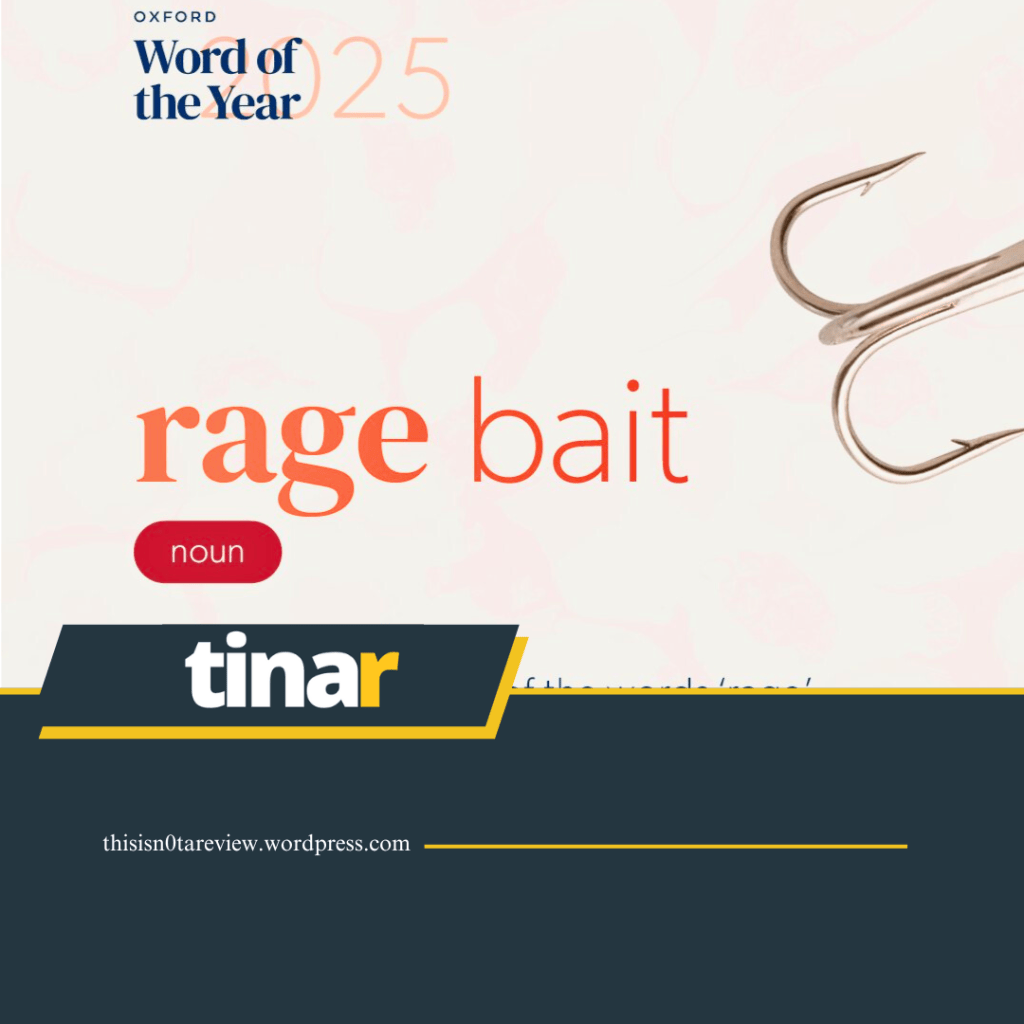
Oxford University Press has officially crowned “rage bait” as its 2025 Word of the Year, and honestly, it feels less like a celebration and more like a diagnosis. The word didn’t win because it’s clever; it won because it captures the emotional economy we’ve been living in. The internet no longer rewards truth, nuance, or expertise, it rewards whatever keeps the thumb moving and the heart rate slightly elevated. Rage, conveniently, does both.
But the win points to more than global digital fatigue. It gives language to a familiar pattern in South Africa’s social media landscape, where frustration is not just a mood but a market.
South African social media has always had its own ecosystem, one shaped by politics, inequality, race relations, electricity outages, petrol prices, and the constant ability of our public figures to generate drama with Olympic-level consistency. Rage bait thrives here because it doesn’t need to be manufactured; it just needs to be framed. A slightly misleading caption, a cropped screenshot, a voice note missing the first two seconds, and suddenly, the nation is debating something no one fully understands.
You can almost see the template:
“Here’s something to be angry about — but don’t worry, the facts are optional.”
Consider how quickly a minor story becomes a national referendum. A crumpled Woolies receipt. A taxi altercation filmed from one strategic angle. A mother posting her child’s first-day-of-school picture with the school badge visible and thousands of people (including me) “advising” her in the comments. Everything is content, but more importantly, everything is a potential spark. The outrage doesn’t even have to be justified, it only has to be engaging.
And engagement, of course, is the real prize. Rage bait works because it collapses the line between emotional reaction and digital performance. People aren’t just angry; they’re angry publicly, with quote tweets, reposts, and stitched TikToks acting as fuel. Outrage feels communal, even when it’s hollow.
What makes the South African version particularly potent is context. We scroll with the weight of everything else we’re carrying, rising costs, safety concerns, political tension, broken infrastructure, cultural differences, and that lingering sense that we’re constantly one announcement away from a new crisis. In that environment, rage bait doesn’t need to shout; it only needs to tap lightly. The response is already primed.
The problem is that rage bait also flattens our conversations. It keeps us reacting instead of reflecting. It pushes us toward the loudest interpretation rather than the most accurate one. And it keeps the cycle spinning, because outrage is exhausting, but also addictive.
So when Oxford says rage bait is the word of the year, it’s not just commenting on the digital world. It’s pointing at how we’re being emotionally engineered, globally and locally, into a perpetual state of irritability. South African social media didn’t invent rage bait, but we’ve perfected the algorithmic conditions that allow it to thrive.
The lesson isn’t to disengage completely. It’s to recognise the bait before we bite. To ask why this piece of content wants your anger and who benefits from it.
Because if rage is the product, then someone, somewhere, is counting the clicks.
No comments on Rage Bait, Word of the Year: A Mirror Held Up to the Scroll
Rage Bait, Word of the Year: A Mirror Held Up to the Scroll