
Cape Town loves to call itself a world-class city, and it’s very fitting. The phrase appears in tourism campaigns, investment decks, airport milestones, and glossy social media posts announcing its arrival on the world’s most iconic streets such as New York, London, and Europe, to name a few. It is offered as proof of progress, competence, aspiration. But beneath its polish, the “world-class” PR operates less as a description and more as a governing logic: one that quietly decides who the city is for, who it is marketed to, and who is expected to adjust when the costs of that ambition arrive.
The recent surge of public frustration from locals about rising rents, crowded beaches, inaccessible restaurants and unaffordable everyday life has been treated as a sudden awakening, as though Cape Town has only just tipped into excess. Yet this framing erases a longer, more uncomfortable history.

Black and Coloured Capetonians have been warning about displacement for years, particularly as short-term rentals expanded, tourism intensified, and digital nomads earning foreign currencies settled into neighbourhoods never designed to absorb global demand. Their concerns were not met with empathy or policy intervention, but with moral judgement: work harder, earn more, and leave if you can not afford it. In those moments, the city’s limits were framed as personal failures rather than political choices.
What has changed now is not the system, but its reach. The same pressures that once pushed working-class and marginalised residents quietly outward are now squeezing into white middle-class life, into brunch routines, rental expectations, and leisure spaces. The shock currently circulating on social media (TikTok being the main platform of mourning the life that once was) is less about the existence of inequality than about its arrival in homes and safety norms of people who once assumed to be insulated. This is not a new crisis; it is a widened one.
City-led messaging makes this dynamic harder to ignore. Recent official posts celebrating Cape Town’s biggest-ever tourism and place‑marketing campaign, rolled out across New York, London, and major European cities, sit uneasily alongside growing local frustration. While white residents now actively voice concerns about the cost of living and access, Cape Town’s official channels celebrate record-breaking passenger numbers and the global rollout of tourism campaigns across six continents. These are not passive developments. They are deliberate strategies to manufacture demand, to convert attention into arrivals, arrivals into bookings, and bookings into economic validation. The city is not simply responding to popularity, it is producing it.
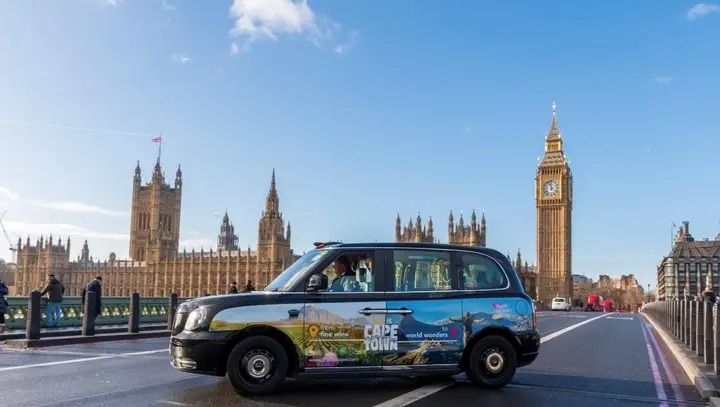
The defense is familiar and seemingly unassailable: tourism creates jobs. This logic is reinforced by celebratory milestones, such as announcements that Cape Town International Airport has surpassed 11 million passengers in a single year, ngaske ndi’khale because these are figures presented as unquestionable success rather than prompts for deeper scrutiny. The Westgro post does significant political work while remaining frustratingly vague. It obscures questions about the quality of those jobs, the wages attached to them, and whether they meaningfully offset the rising costs of housing, food and transport. It also assumes that economic activity automatically translates into shared benefit, an assumption that Cape Town’s spatial and racial history repeatedly disproves. Growth, in this context, is not neutral. It lands where power already exists and pushes hardest where it does not.
The idea of a world-class city, as currently practiced, depends on a hierarchy of comfort. International visitors are prioritised as economic actors; residents are reframed as service providers or obstacles to efficiency. Cultural neighbourhoods become backdrops. Homes become assets. Public space becomes content. And when those living within the city begin to feel alienated from it, the response is not to question the model, but to encourage adaptation: move further out, lower expectations, accept inconvenience as the price of progress.

I think nathi apha ku’TINAR have celebrated some of the milestones the city reaches. Media coverage often reinforces this framing by treating tourism growth as inherently positive and resident discomfort as an unfortunate side effect rather than as evidence of policy failure. Displacement is individualised, while expansion is celebrated collectively. This imbalance matters because it determines whose pain is legible and whose is dismissed as inevitable.
A truly world-class city would measure success differently. It would ask not only how many people arrive but who can stay. It would balance global visibility with local security. It would recognise that housing stability, access to public space, and the ability to live with dignity are not sentimental concerns but core infrastructure. And it would understand that when residents feel like strangers in their own city, the issue is not attitude, it is governance.
Cape Town stands at a familiar crossroads. It can continue to market itself outward while managing fallout inward, or it can pause to interrogate the logic it has embraced. The question is no longer whether tourism and international interest bring value, they do. The question is whether a city can call itself world-class while asking its people to disappear quietly to make room for the view.
In the coming months, This Is Cape Town is set to go live in additional markets including China, India, the United Arab Emirates and Australia.This year, we will be exploring more of this conversation around tourism and its hidden impact on locals.


