
In our final piece of the “Steers Menlo Park” incident, we conclude by looking at how public sympathy can increase private risk. Worker safety after viral moments is the real test of ethical leadership.

Public outrage often creates the illusion of protection. In reality, it can expose workers to new forms of harm. The employees filmed gardening outside Steers did not seek visibility. Yet they now carry it, and visibility, in unequal workplaces, is rarely neutral. Workers associated with public controversy are often quietly punished: shifts reduced, scrutiny increased, relationships strained.
This is the part of labour abuse we rarely interrogate, what happens after sympathy. Being publicly identified as a victim does not dissolve power imbalances. In some cases, it sharpens them. Managers called out for misconduct do not automatically develop remorse or compassion. Too often, they develop resentment.
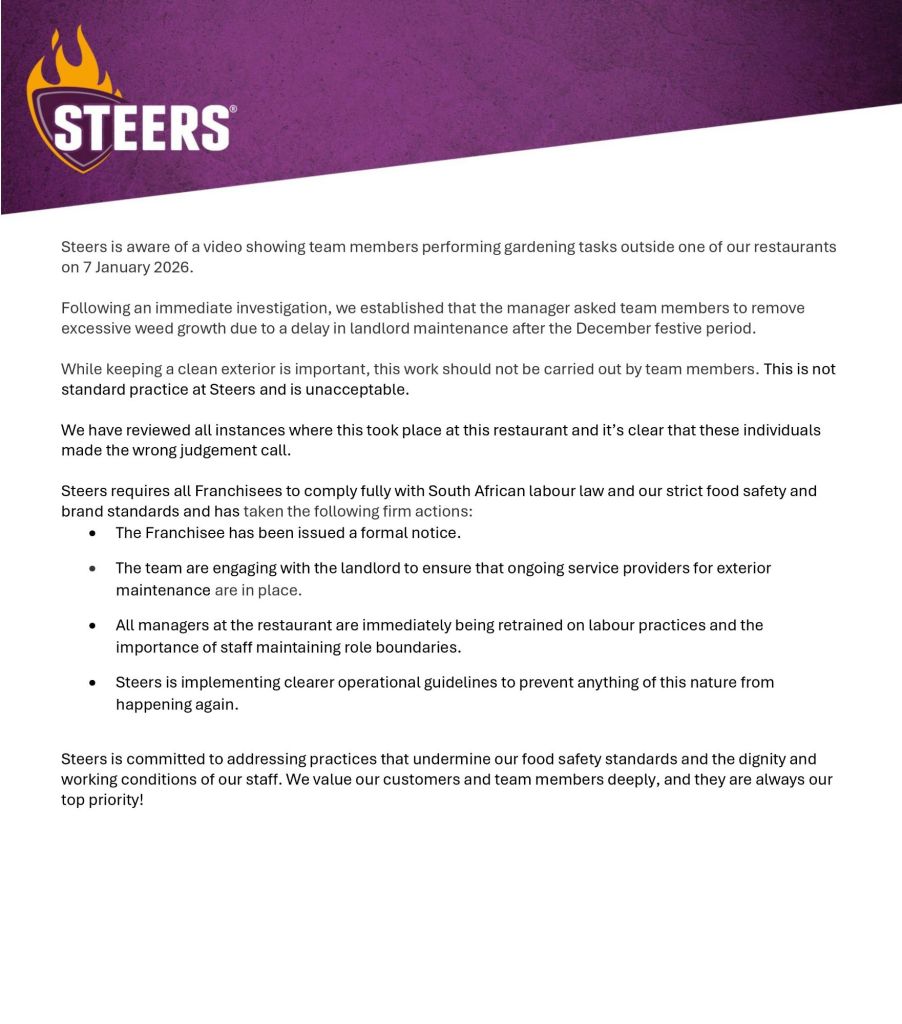
Leadership structures frequently underestimate this human response. They assume that training resolves harm, that apologies repair trust, that policy replaces accountability. But without explicit anti-retaliation safeguards, workers pay the emotional and professional cost of “bringing trouble”.
True ethical response requires more than statements. It requires:
- confidential reporting channels,
- independent oversight,
- and clear protections against victimisation.
Otherwise, the burden of accountability quietly shifts back onto the very people who had the least power to begin with.
If this incident is to matter, the question must be asked plainly:
Who is checking on the workers not the brand?
Because exploitation does not end when it is exposed, we can all affirm that it often simply becomes quieter.


