If you’ve ever watched a YouTube video and thought, “This deserved more” more reach, more recognition, more reward, YouTube’s Super Thanks feature is one of the most direct ways to act on that feeling.
While I didn’t set out to interrogate YouTube’s monetisation tools this week. I stumbled into one.
Yesterday, while watching a video from a channel I’m subscribed to, Confidence Shop, I noticed the small heart icon beneath the video. Curious, I clicked. That’s when I realised the creator had Super Thanks enabled. They had announced they were monetised recently, but because I watched the whole video and there were no ads, I snooped around and stumbled on the small heart with a $ sign. I tested it out, partly out of interest, partly out of appreciation for the work and content, and partly because something about how accessible the process felt surprised me.

In South Africa, you can send a Super Thanks using airtime. That detail matters more than it sounds.
Super Thanks is YouTube’s built-in way for viewers to support creators on a per-video basis. It’s a once-off contribution, not a subscription, not a membership, not a move to an external platform. You tap the heart icon, choose an amount, and leave a message. The creator receives about 70% of that contribution, and your comment is highlighted in the comments section. It’s not loud. It’s not branded as charity, and it’s not framed as an obligation. It’s simply a way of saying: this specific piece of content mattered to me.
In many global conversations about the creator economy, monetisation assumes access: credit cards, disposable income, frictionless payment systems. That assumption doesn’t always hold here.
What struck me immediately when I tested Super Thanks locally was how practical it felt.
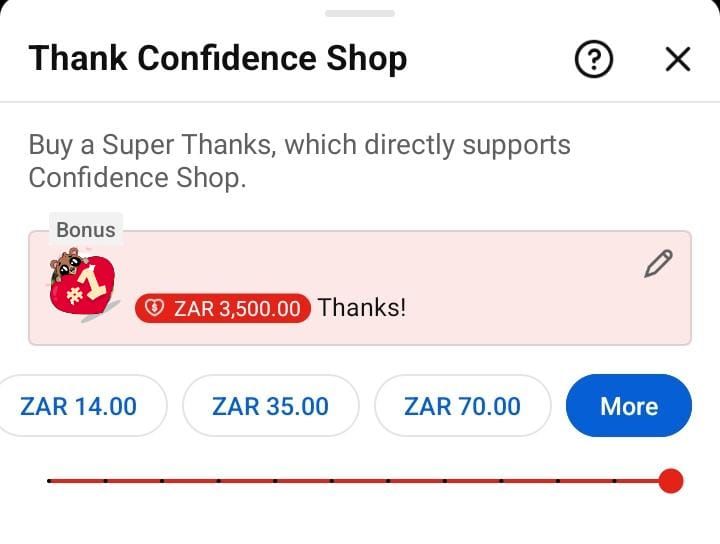
- You can gift as little as R14
- Or as much as R3,500
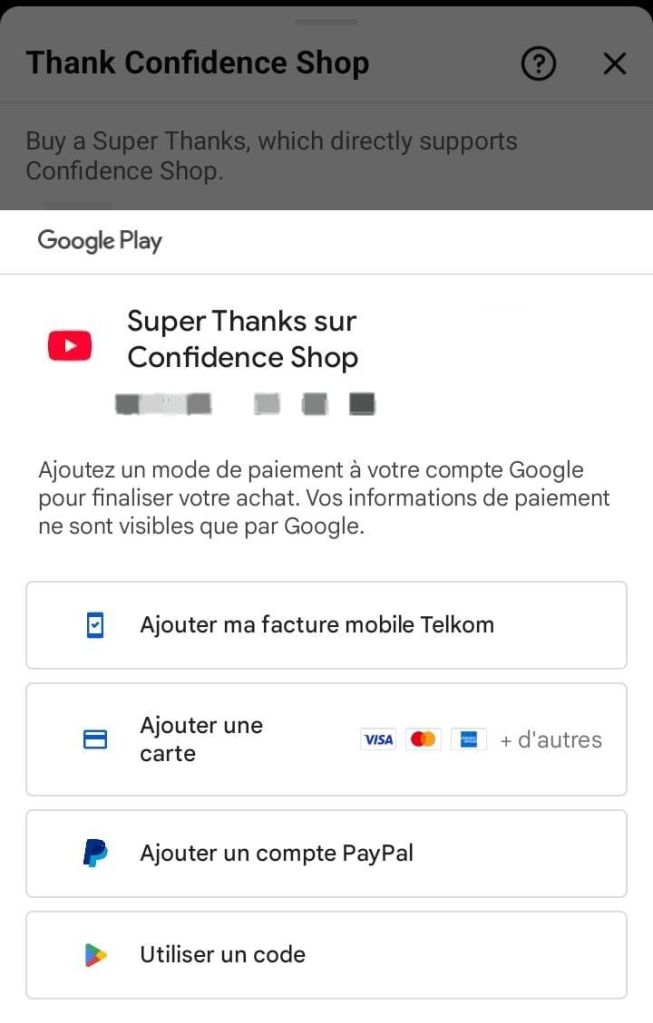
- You can pay using:
- Google Play credits
- Bank (Digital wallet)
- Airtime
- PayPal
That range, both in price and payment method, quietly lowers the barrier to participation. For audiences who: don’t have credit cards, prefer not to use them online,
or are navigating uneven cash flow,
airtime becomes a form of cultural currency. Familiar. Already budgeted. Already understood.
This turns Super Thanks from a “nice-to-have” into a genuinely inclusive support mechanism.

Now, let’s get to the meat of this piece: What Super Thanks offers creators, beyond the money.
For South African creators, particularly those working in commentary, lifestyle, social, education, media critique, or niche storytelling, Super Thanks does something subtle but important.
It allows creators to:
- keep content free and accessible
- avoid aggressive sponsorships
- resist paywalls that exclude local audiences
- monetise depth, not just volume
Unlike ads, which reward scale, or brand deals, which reward alignment, Super Thanks rewards resonance. A viewer isn’t supporting the channel in the abstract, they’re responding to a specific idea, a moment of clarity, a video that landed. That kind of feedback loop is rare and deeply affirming, in my opinion.
Super Thanks isn’t flashy. It won’t replace brand deals. It won’t suddenly make creators financially secure. But in a local context shaped by inequality, access gaps, and platform fatigue, its value lies in its restraint. It offers support without spectacle, appreciation without pressure, monetisation without exclusion.
South Africa is already a country where so much creative labour is undervalued, that quiet exchange, R14, R34, R70 airtime, a short note of thanks, can mean the difference between burnout and continuation.
And sometimes, continuing is the most radical outcome of all.
So where I stand, and as I write this short article, I invite you to support your favorite content creators by subscribing to those channels, getting them over the 1000 subscribers mark, engaging with those vlogs and when eligibility knocks on their doors, be at the forefront of paying it forward.