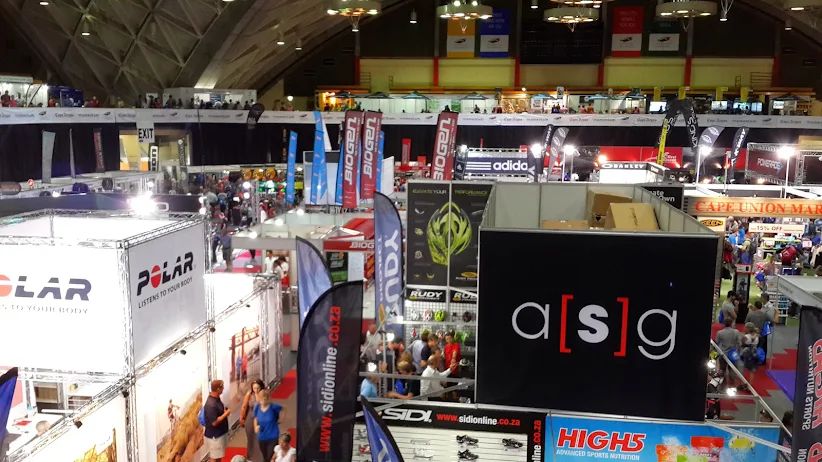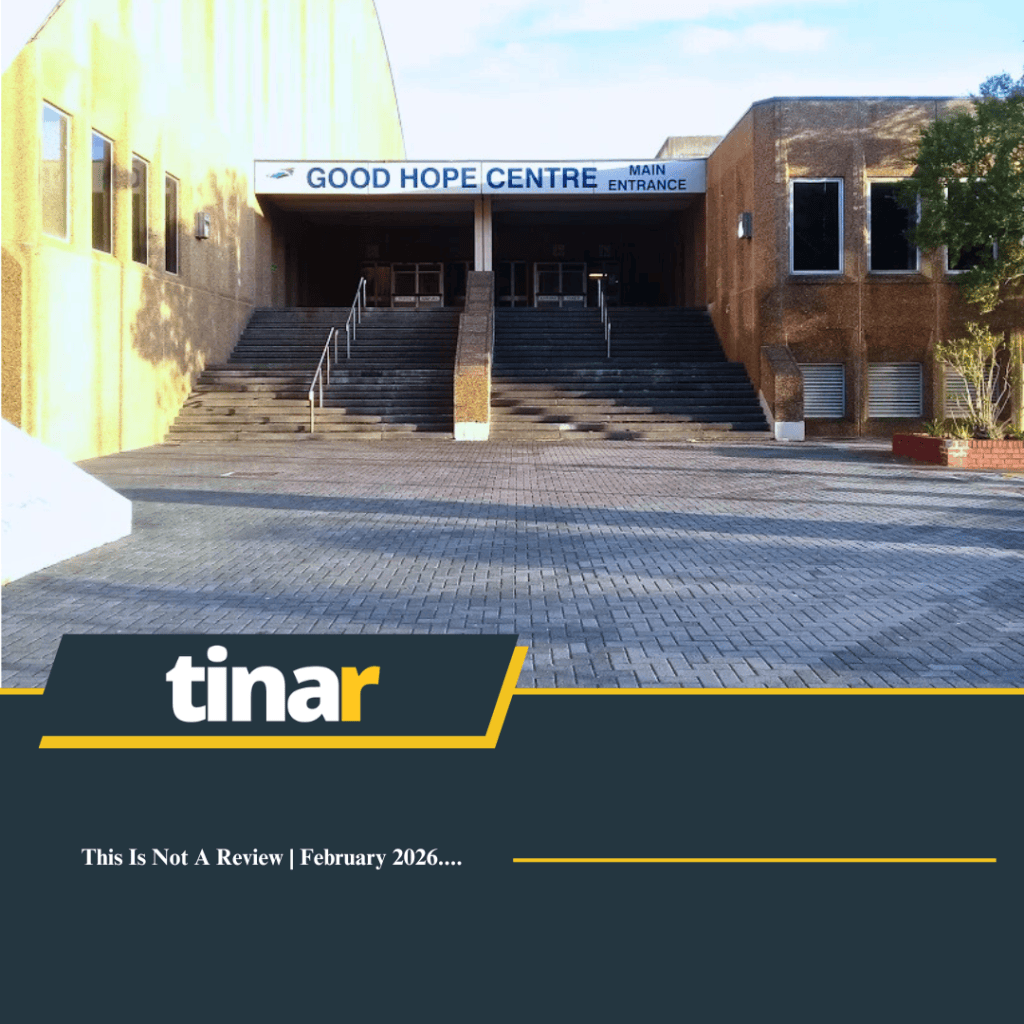
The Cape Town Good Hope Centre stands as a “Grand Dame” not because it is of ornate beauty, lace and chandeliers, but as a once-commanding presence, a building that has hosted generations, witnessed eras, and once stood with quiet dignity as the city moves around it, this is not a review, but it is a conversation about nostalgia and a subtle admiration for architecture that demanded attention.
This building has watched Cape Town evolve from apartheid-era segregation, democracy and into the cities current wave of redevelopment. She carries gravitas, and so in her last days, we dedicate today’s conversation to her.

Rising from the edge of Cape Town’s Foreshore, the Good Hope Centre has long stood as one of the city’s most distinctive civic landmarks. Opened in 1970’s, the vast exhibition hall was conceived as a bold architectural statement, a space capable of hosting the scale and spectacle of a growing metropolis. Nearly five decades later, it remains etched into Cape Town’s collective memory, not only for its striking design but for the generations of gatherings, celebrations, and shared moments it sheltered beneath its concrete vaults.
Designed by the celebrated Italian engineer and architect Pier Luigi Nervi, in 1976, and inaugurated in 1977, the Centre was an engineering marvel of its time. Nervi was internationally known for his daring use of reinforced concrete, and at the Good Hope Centre he delivered something extraordinary: a sweeping cross-vaulted roof constructed from precast concrete elements, forming one of the largest structures of its kind in the world at the time. The vast, column-free interior allowed for flexibility, an uninterrupted arena capable of transforming from exhibition hall to sports venue to concert stage in a matter of days.
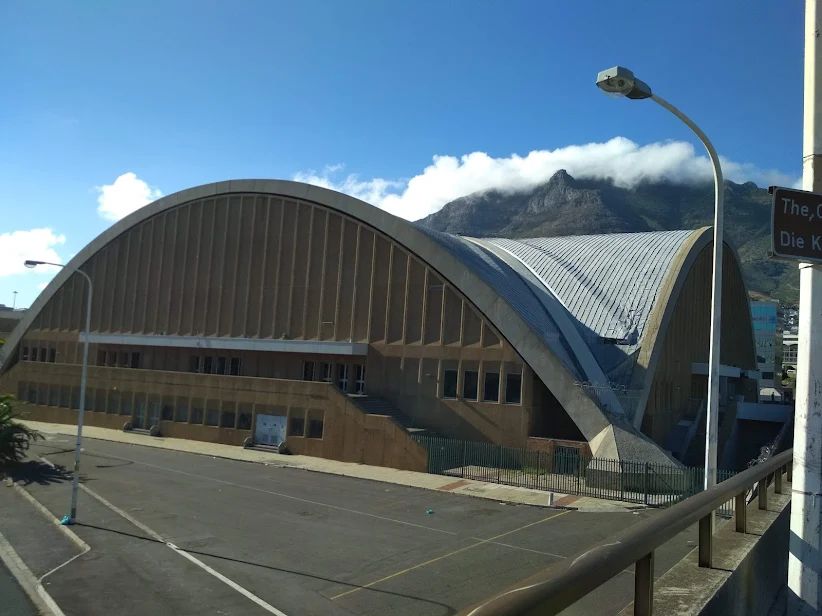
Granted, the Good Hope Centre was never simply about architecture. It was about atmosphere, social networking prospects, international and local entertainment, for decades, it functioned as one of Cape Town’s primary large-scale indoor venues, hosting trade exhibitions, community gatherings, political assemblies, sporting tournaments and cultural festivals. The thud of indoor soccer balls, the squeak of basketball sneakers, the hum of market stalls, the roar of music concerts, all reverberated through its cavernous interior. School prize-givings, dance competitions, boxing matches, expos and faith gatherings each left their own imprint on the space.
During the late apartheid era, the Centre also occupied a complex but important position in the city’s civic life. It was envisioned as a venue that could accommodate diverse audiences at a time when public access to space was heavily restricted. In this way, it became, however imperfectly, a site where Cape Town’s social and cultural lines blurred, if only temporarily, under the expanse of its concrete ceiling. Its architectural boldness and layered social history eventually led to its formal recognition as a heritage resource. This designation affirms what many Capetonians already felt instinctively: that the Good Hope Centre is more than an events venue. It is part of the city’s architectural and civic legacy, a monument to 1970s modernist ambition and to the communal experiences that unfolded within its walls.
Life moves and cities evolve, Cape Town has never stood still. The Foreshore, once defined by open expanses and utilitarian civic structures, has gradually transformed into a district of glass towers, mixed-use developments and commercial reinvention. As skylines sharpen and property values climb, historic buildings increasingly find themselves caught between preservation and progress. The Good Hope Centre, with its heavy concrete geometry and unmistakable silhouette, feels almost like a relic of a different urban philosophy, one that prioritised monumental civic space over commercial gloss.
Murmurs have been brewing about the sale of the Good Hope Centre since the middle of 2025, February 2026 seems to come with confirmations that this “Grand Dame” is indeed going on auction. With headlines narrated in aspirational undertones that signal big changes coming to Cape Town’s skyline. Announcements that the City is set to auction around 50 properties across the metro, including the iconic Good Hope Centre.
In total, the properties cover around 282,000 square meters and include residential, commercial, and mixed-use spaces. The auction goes live online and in person on Thursday. Economic Growth MMC James Vos says all sites have been vetted and are not needed for municipal purposes.
“And I’m actively driving this programme because land must work for our economy,” Vos said. “Government shouldn’t simply hold on to land because when it stands idle, it creates no jobs, adds no value, and is often at risk of invasion.” States MMC James Vos.
A slice of history is about to change, and I hope the future scholars of architecture in South Africa will at least get to learn more about the historic buildings that will soon vanish in visible stature across the inner city. The nostalgia of this building is embedded in many memories of those who once attended school events, concerts, and exhibitions there, I hope the legacy of that building lives on for many years after its rebuild and restructuring.