
Oh we love to see it! community cricket’s commercial potential deserves an ongoing closer look.
D&P Cricket has announced the expansion of its online club clothing shop initiative to five cricket clubs, welcoming Cape Town Cricket Club, Brackenfell Cricket Club and Green Point Cricket Club to an initiative already serving Western Province Cricket Club (WPCC) and Durbanville Cricket Club. The model, based on the social medkia post gives players, members and supporters access to official club clothing through dedicated online platforms. On the surface, this is perhaps an entry level merchandise announcement. From a sports marketing perspective, however, it is worth examining what happens when a sporting institution makes its identity commercially accessible beyond the boundary ropes.
Online club shops are a relatively accessible entry point into sports merchandising. Not every cricket club has the audience, commercial infrastructure or resources to develop an extensive retail operation, but merchandise offers an opportunity to start building one. A player needs kit, a parent wants to support their child’s sporting journey, an alumnus remains attached to the club they represented, and a supporter wants to wear the colours they identify with. An online shop gives these communities another way to participate in the club’s commercial ecosystem, without necessarily requiring them to be physically present at the grounds. It also creates a more convenient route to purchasing official merchandise, potentially extending the club’s reach beyond its immediate membership. The opportunity lies in making merchandise accessible while turning existing community connections into additional points of commercial engagement.
But the real business conversation begins when we look beyond the initial clothing sale. A club’s identity is an asset (and we talk about assets a lot here), and merchandise can be one of the ways that identity generates commercial value. There is potential to explore seasonal collections, championship commemorative apparel, alumni merchandise, junior cricket ranges and limited-edition releases tied to significant club milestones. These are possibilities rather than confirmed features of the D&P Cricket initiative, but they illustrate the room for development when merchandising is approached strategically. An online shop can also become a useful component of broader sponsorship activations, offering brands opportunities to collaborate on selected products or campaigns. The commercial prospects would depend on demand, production costs, fulfilment, margins and the arrangements between the retailer and each club. Nevertheless, the underlying principle is worth considering because a club does not have to operate at professional franchise level to develop a merchandise proposition around an established sporting identity.
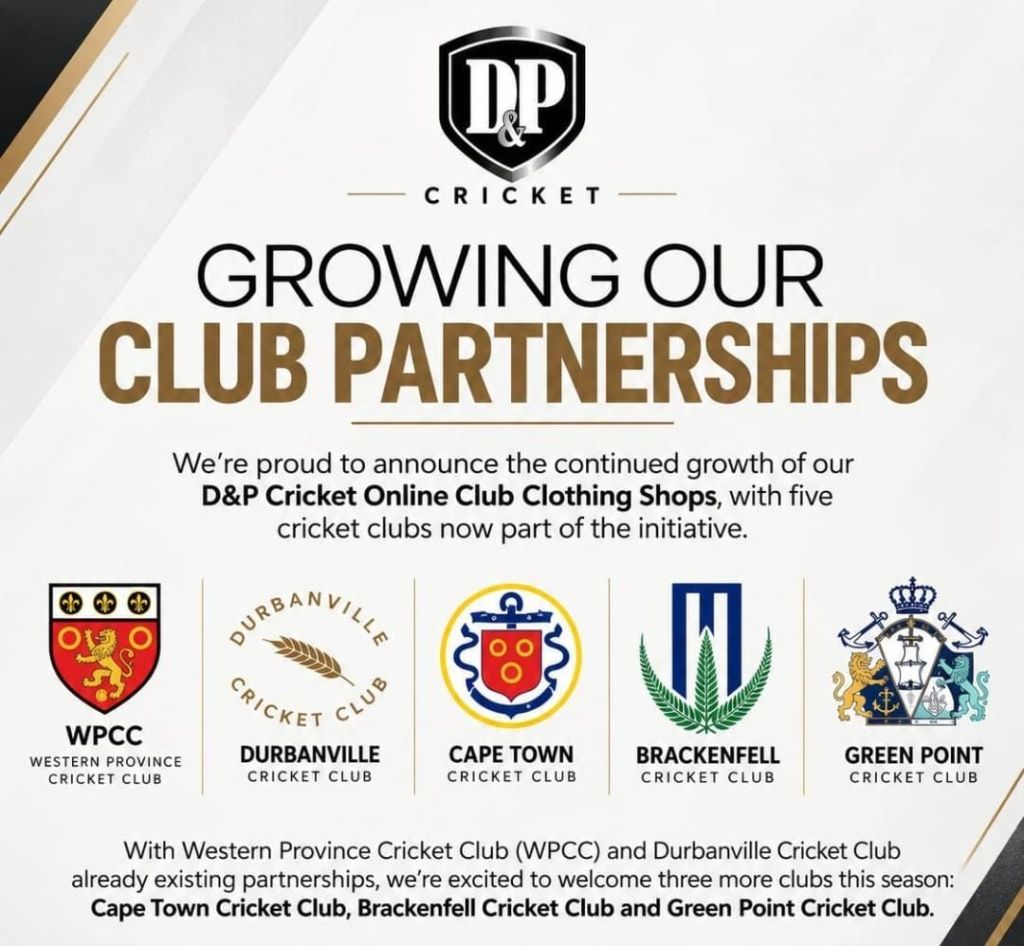
For D&P Cricket, expanding from two existing club partnerships to five also presents an interesting business development story. Working with established clubs provides access to communities that already have relationships with their respective brands, while the online retail model offers a dedicated route through which those communities can access merchandise. For the clubs, the value of such an arrangement ultimately depends on how the partnership is structured, how effectively the shops are marketed and whether the model produces tangible commercial benefits. Questions around revenue sharing, inventory management, order fulfilment, customer data and the ownership of the customer relationship would help establish the full value of the proposition. These are important considerations because a successful merchandise partnership should do more than make clothing available; it should create a commercially useful arrangement for the businesses involved and the sporting communities they serve.
The expansion is a reminder that some of the commercial opportunities in cricket may be found not only in major tournaments and professional franchises, but also in the everyday infrastructure of community sport. Online merchandise is not a complete commercial strategy on its own, but it can provide an accessible starting point from which clubs explore additional revenue opportunities, deepen supporter engagement and develop their brands. There is also room to consider how these models might support women’s and junior cricket, particularly where teams have dedicated communities whose achievements and identities could be celebrated through merchandise. Whether those opportunities are realised will depend on the appetite to develop the model beyond its initial retail function. For now, D&P Cricket’s growing network offers an interesting case study in sports merchandising where the question is no longer simply whether a cricket club can sell its clothing online, but how effectively that access can be developed into a broader commercial asset.


