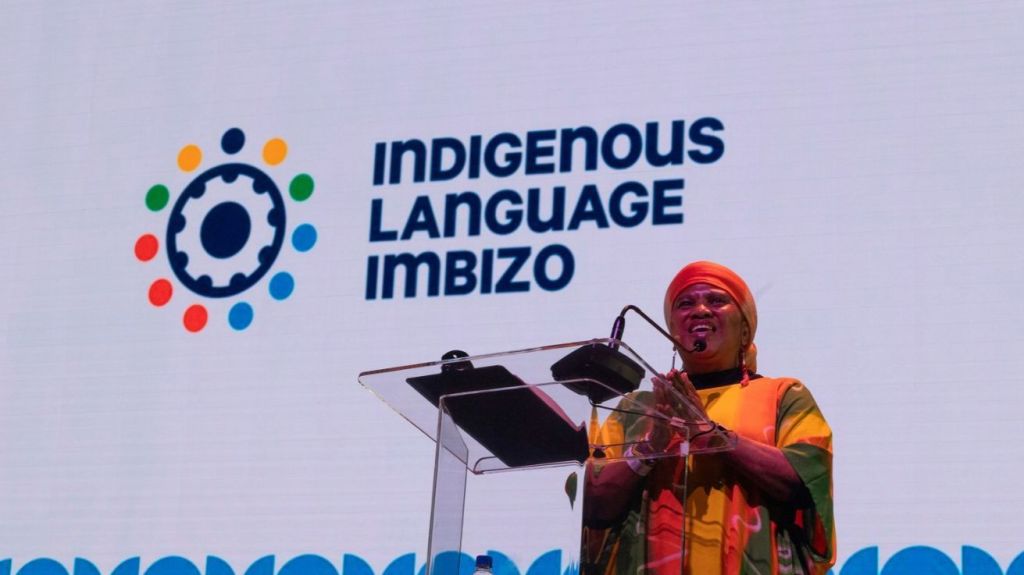
South Africans are being invited to gather under a tree once more, this time to explore the relationship between indigenous languages, cultural memory, power and the technologies increasingly shaping how societies communicate and preserve knowledge. The Indigenous Language Imbizo 2026, taking place on Tuesday, 24 November at the University of Johannesburg, will bring together academics, linguists, creatives, technologists and policymakers for a conversation about the place of indigenous knowledge systems in an increasingly digital world.
Titled “Under Our Tree: Language, Memory and Power in the Age of Digital Transformation”, the event draws inspiration from the symbolism of gathering beneath a tree, where communities have historically come together to exchange knowledge, listen, deliberate and resolve matters collectively. The 2026 Imbizo also takes place against the backdrop of 30 years since the adoption of South Africa’s Constitution, introducing another layer to the conversation about representation, participation and whose voices are heard in shaping the country’s future.
Organised as part of iPendoring’s 2026 #SayMo campaign, the Imbizo seeks to move beyond the familiar argument that indigenous languages simply offer alternative ways of expressing the same ideas. Instead, it explores how languages carry distinct knowledge systems, cultural experiences and ways of understanding the world. With artificial intelligence and digital technologies increasingly influencing how information is created, translated, distributed and archived, questions around language ownership, representation and cultural preservation are becoming increasingly relevant. Who owns the knowledge being incorporated into these technologies, whose languages are represented, and who ultimately benefits from their commercial and cultural value?
The programme will feature a keynote address, “Who Gets to Speak for the Nation? From the Constitutional Assembly to the Digital Public Square”, followed by three panel discussions examining language ownership in the age of artificial intelligence, indigenous innovation in contemporary creative culture, and the preservation of cultural memory through translation and digital archives. Among the speakers are Dr Seani Rananga of the University of Pretoria, internet governance specialist Anriette Esterhuysen, Dr Matefu Lefty Mabela of the University of Johannesburg, animator and illustrator Pola Maneli, creative entrepreneur Collen Dlamini, theatre-maker Mahlatsi Mokgonyana, National Heritage Council Chairperson Sephue Tau Masemola and Professor Liz Gunner of the University of Johannesburg.
For iPendoring General Manager Eben Keun, the symbolism of gathering under a tree speaks to a broader understanding of justice and democracy, where listening, participation and collective resolution are as important as formal decisions. The organisers hope the Imbizo will encourage participants to consider indigenous languages and knowledge systems not as remnants of the past, but as active contributors to how African societies imagine, create and participate in the future.
Students, professionals, creatives, academics and community leaders are invited to participate in the conversation. With tickets priced at R50, including light refreshments, the event offers an opportunity to engage with questions that extend beyond language preservation and into technology, intellectual ownership, creative industries and the future of cultural representation.
Event details
- Event: Indigenous Language Imbizo 2026 – Under Our Tree: Language, Memory and Power in the Age of Digital Transformation
- Date: Tuesday, 24 November 2026
- Time: 09:00–13:00
- Venue: Keorapetse William Kgositsile Theatre, Kingsway Campus, University of Johannesburg
- Tickets: R50 per person (includes light refreshments)
- Bookings: [Purchase tickets here](INSERT TICKET LINK)
This is not simply a conversation about keeping indigenous languages alive. It is also an invitation to consider what happens when the languages, histories and knowledge systems of communities become part of the technologies shaping tomorrow.


