
More than 10,000 developers registered for the 2026 FNB App of the Year Hackathon in October, bringing together aspiring technology entrepreneurs and developers to explore how digital solutions can address some of South Africa’s everyday challenges. From access to higher education and youth employment to small-business development, financial inclusion, gender-based violence response and climate resilience, this year’s hackathon placed considerable attention on the relationship between technology and practical problem-solving. The registration figure is worth noting because it represents more than an appetite for a coding competition as it points to a substantial pool of people interested in developing digital skills, building solutions and participating in an increasingly important technology economy. The question now is how much of that interest can be converted into practical experience, sustainable businesses and economic opportunities.
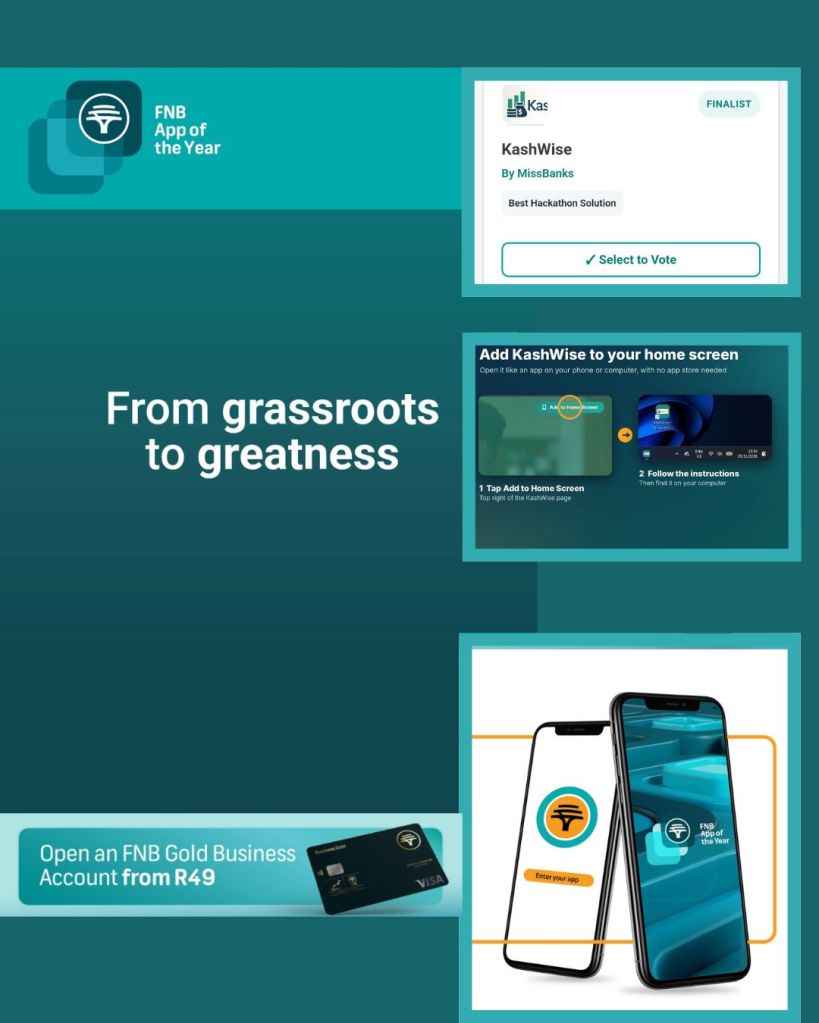
The announcement of the 2026 FNB App of the Year Awards finalists gives us an opportunity to put some of that innovation into the spotlight. Among the shortlisted applications are three finalists competing for Best Hackathon Solution, those being : FloFund Compass by Flofund, KashWise by MissBanks and Khusela by Khusela. Their inclusion places the hackathon’s outcomes within a wider awards platform that recognises applications across consumer services, financial solutions, education, healthcare, agriculture, gaming, enterprise and other areas. It is also an opportunity for the public to discover developers and applications that might otherwise receive limited visibility outside their immediate industries or communities. Rather than viewing the awards purely as a celebration of established applications, I do believe there is greater value in recognising the developers and emerging solutions contributing to the next generation of South African technology.
This is not a review, but what makes the FNB App of the Year programme particularly more interesting is the combination of the awards, the FNB App Academy and the annual hackathon. These are three connected parts of a broader development proposition where the Academy provides a learning opportunity for aspiring developers and technology entrepreneurs, the hackathon creates an environment in which participants can apply their thinking to real-world challenges, and the awards provide recognition and visibility for applications and their creators. The App Academy is a free online learning programme with learning pathways involving the University of Johannesburg’s Johannesburg Business School Centre for Entrepreneurship and Accenture. This connection between learning, practical application and public recognition is worth highlighting because developing a technology ecosystem requires more than identifying a few successful applications each year. It opens opportunities for people to acquire skills, experiment, build networks and progress beyond their initial ideas.
The hackathon’s six problem areas also deserve attention because they connect technology development to some of the country’s broader economic and social priorities. A digital solution that helps a young person navigate education funding, connects jobseekers to opportunities, assists township entrepreneurs with business operations or improves access to financial services has the potential to contribute beyond the technology sector itself. Similarly, solutions addressing safer communities and climate resilience invite developers to consider the everyday experiences of the people who might eventually use their applications. There is, however, an important difference between developing a prototype and building something that people can afford, access, trust and use consistently. Data costs, connectivity, digital literacy and the realities of different communities all influence whether an innovative idea becomes a useful product. The development journey therefore needs to be measured not only by what gets built, but also by what reaches the people it was intended to serve.
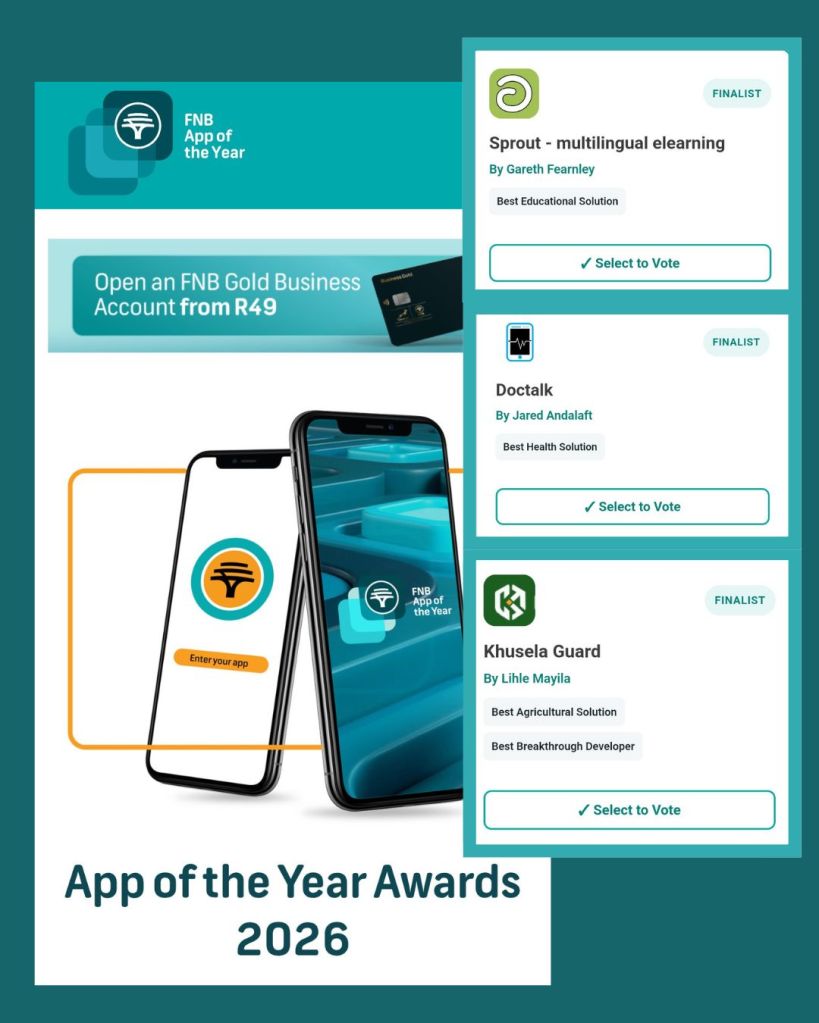
Beyond the three hackathon finalists, the wider 2026 People’s Choice shortlist features an interesting range of applications that readers can explore and vote for. These include (my)cards, Abuti spinach, Admyt, ARSA POS, Bash, Doctalk, Dooable, Firefinch, Fixxr, FloFund Compass, Guardian Health, IrriCheck Pulse, iStokvel Online, Jobox Bursary Platform, KashWise, KasiConvocation, Khusela, Khusela Guard, Lerumo (Command Center + Edge), Matric Ready, Mr D, Mzansi Charades, Pelevera, Playtomic, Recess, Sprout, SweepSouth, Udok, UniApplyForMe and Zlto. The shortlist includes applications developed by individuals and teams working across different industries, with several appearing in more than one award category. Readers can visit the official FNB App of the Year voting platform, explore the finalists and select their favourite applications. It is an opportunity to discover some of the work happening in the local technology space while supporting the developers bringing these ideas to market.
While this will be an ongoing series, the bigger story extends beyond this year’s trophies. More than 10,000 hackathon registrations provide a substantial starting point for a conversation about talent development, but the longer-term value of this ecosystem will depend on what happens after the competition. How many participants continue developing their skills? How many complete the App Academy? How many ideas progress into working applications, businesses or employment opportunities? What support is available to developers who need mentorship, investment, incubation and access to markets? These are the outcomes worth following as the FNB App of the Year Awards, App Academy and annual hackathon continue to develop. I’ve always believed that South Africa has no shortage of people with ideas or an interest in technology, building the pathways that help them turn that interest into meaningful participation in the digital economy is where the real opportunity lies.


