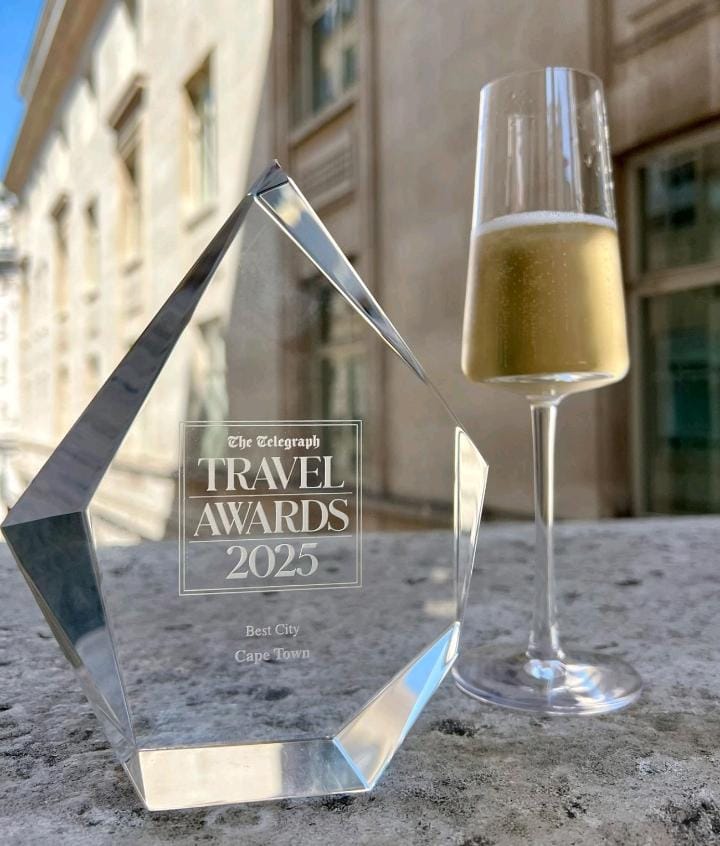
But what does this global recognition mean for the people who call it home?
As Cape Town does it again.
In the latest 2025 Telegraph Travel Awards, the Mother City was officially voted the Best City in the World for the umpteenth time. This title is not just a feather in the city’s cap; it’s a glowing endorsement from thousands of Telegraph readers, most of whom are global travellers with access to the world’s top destinations. The win also follows Cape Town’s recent #1 ranking in Time Out’s 2025 global survey, reaffirming what many already feel: Cape Town is not just world-class, it is the world’s class.
Why People Keep Falling in Love with Cape Town
From our ever-iconic Table Mountain and Atlantic Ocean sunsets, to the vibrancy of the people, art, and food, Cape Town’s allure is undeniable. Visitors often describe it as a place that feels simultaneously cosmopolitan and grounded, deeply cultural yet surrounded by untouched nature. Whether you’re hiking Lion’s Head at sunrise, exploring a bustling market in Woodstock, or wine-tasting in Constantia to Stellenbosch, there’s no shortage of “bucket list” moments here.
The city’s evolving food culture, architectural blend, and outdoor lifestyle have made it especially appealing to digital nomads, remote creatives, and global investors looking for new playgrounds and second homes.
Tourism and lifestyle rankings like this one are more than just PR. They feed real momentum as awards attract:
- International press coverage
- Increased travel interest and airline routes
- Greater investor confidence
- And a sense of civic pride
Cape Town Tourism and the City of Cape Town have long invested in marketing the city globally. Campaigns like “This is Cape Town” and “Find Your Freedom” have worked to tell stories of a layered, complex city, rich in heritage, design, resilience, and beauty.
For small businesses, restaurants, hotels, and tour operators, accolades like this can translate into tangible bookings and visibility. It’s a win, economically speaking.
But Who Really Wins?
So this is where things get complicated.
While Cape Town’s global status soars, there’s a quieter story unfolding at home , one of exclusion, gentrification, and unequal access to the city’s so-called lifestyle.
- Affluent suburbs like the leafy Southern Suburbs, the picturesque Seaboard, and the buzzing City Bowl are seeing a sharp rise in foreign property ownership.
- Digital nomads flock to co-working villas and curated experiences in areas once affordable to middle-class Capetonians.
- Airbnb listings continue to outpace long-term rentals in key neighborhoods.
- And local families are being priced out of areas where generations once lived.
All while service delivery in other parts of the city, including the Cape flats, townships, and peripheral suburbs, remains uneven at best.
So, while the global image of Cape Town thrives, the everyday experience for many locals grows more strained. For some, it may even feel like they’re slowly being turned into guests in their own city.
Yes, let’s raise a glass to Cape Town’s beauty, its people, and its persistence on the global stage. But let’s also ask:
Can Cape Town truly be “the best city in the world” if the people who made it what it is can no longer afford to live in it?