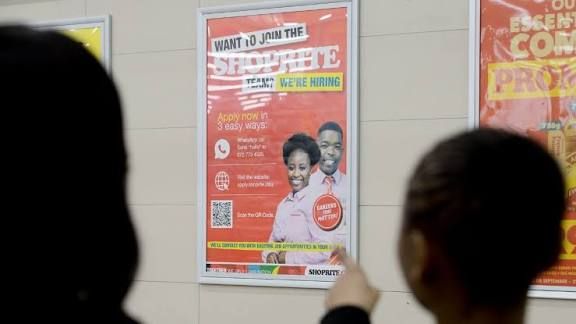
This is not a review, but it is a positive reflection on a small shift of the needle that may, if handled well, create safe working placement procedures because in a country where distance has always been political, Shoprite’s latest hiring shift feels like a quiet revolution to talk about.
The retailer recently announced a new digital recruitment system that prioritises hiring people closer to the stores where they will work. Developed with local tech SMME OTB Group and supported through Shoprite’s Next Capital programme, the platform uses digital tools to streamline candidate assessment while matching applicants to opportunities within their own communities.
The results are already striking:
- New hires now live, on average, 7 km from their workplace, outperforming Shoprite’s internal target of 15 km.
- The system reduces transport costs, commuting times, and barriers to entry for job seekers.
- It helps the company build more stable, consistent local talent pools.
- The project itself has created jobs within OTB Group, strengthening the ecosystem beyond the retail floor.
At face value, this is recruitment innovation. But in South Africa, it is much more than that.
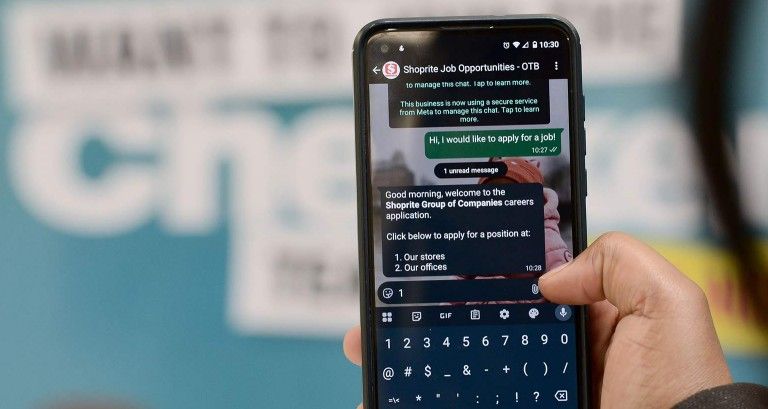
To understand the real power of this shift, you have to start with the history, the geography of inequality in South Africa.
Apartheid spatial planning engineered separation not only by race, but by daily life. Townships & the Cape Flats were deliberately positioned far from economic centres, ensuring that Black and Coloured workers could only access employment through lengthy, costly commutes.
That distance, decades later, is still a barrier that shapes opportunity. But it also shapes something else: control.
South Africa’s public transport landscape forces millions of workers to rely on trains, buses, and most significantly, taxis. Over time, the taxi industry has come to view commuters as territory, not customers. In townships, this ownership manifests in ways that directly impact whether people can get to work at all.
When black owned taxis strike, they expect commuters to stay home. In Cape Town and most recently in Johannesburg, this expectation has become violent enforcement. Commuters attempting to take ride-shares, e-hailing options, buses, or trains have been threatened or attacked because alternative modes of transport are seen as threats to taxi income.
And the painful truth is this:
Most workers don’t have the privilege of working anywhere near where they live. Economic opportunity is still geographically misaligned with the communities most in need of it. And this is perhaps why Shoprite’s new model matters so profoundly.

By hiring people closer to home, Shoprite is not only reducing truancy, late-coming, or logistical pressure. It is restoring a small measure of dignity and control that the average South African worker has been denied for generations.
The benefits ripple outward:
- Workers spend less on transport and less time on the road.
- The risk of intimidation during transport shutdowns decreases.
- Communities benefit when residents work, earn, and circulate income locally.
- Employers benefit from improved reliability and lower turnover.
It is rare to see a corporate initiative respond so directly to a structural problem created by apartheid and later exploited by transport monopolies. And yes, concerns will arise. This is South Africa, after all, and racial politics informs every policy, every system, and every decision. Questions of exclusion will come, but balance will need to be found. That scrutiny is and will be necessary.
But despite its imperfections, the model has already proven its potential: Proximity-based hiring addresses a real, ongoing barrier with measurable impact.
Innovation is often reduced to flashy tech and empty promises, but we can admit that in this recent update, Shoprite has made a grounded, practical intervention, one that indirectly or even unintentionally acknowledges the real lived experiences of South African workers.
This isn’t a perfect solution yet, but it is a meaningful one. It recognises that in our country: Distance is not neutral. Distance is inequality.
And any effort to reduce that distance, literally or structurally, is a step toward a more humane labour system. For once, a corporate initiative isn’t just responding to the market. It’s responding to the people.