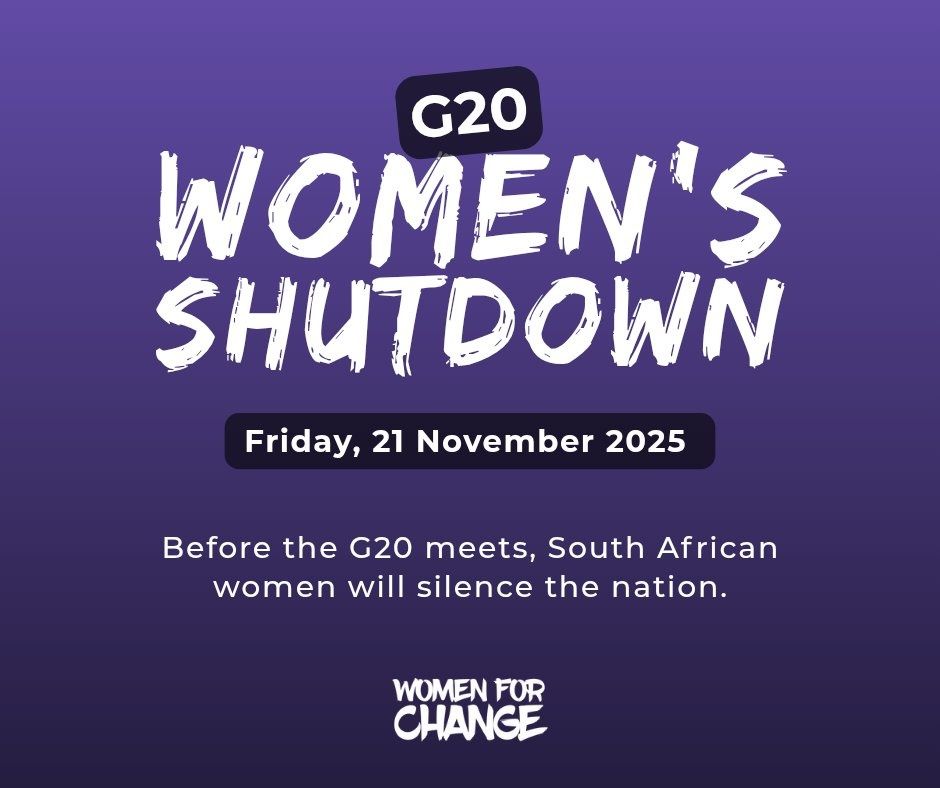
This is not a review, but I need you to lock in on Language used by the President of the Republic around Gender Based Violence and its impact on children and women, and more importantly, why the President’s Declaration of a Nation Crisis Still Falls Short of What Women Asked For, which is to declare GBV a National Disaster.
South Africa woke up today, on 20 November, to news that President Cyril Ramaphosa has officially declared gender-based violence a “national crisis.” It is a long-overdue acknowledgement, but done especially ahead of the G20 Summit, I put it to you that it is not what the country’s women, and the movement by Women for Change , have been demanding.
And this difference matters.
Over the past weeks, activists have been unequivocal: the call was for GBV to be declared a National Disaster, not a National Crisis. I see people celebrate this because at first glance, the terms feel interchangeable, both carry urgency, both signal national alarm. But in South Africa’s legal and governance framework, these two classifications are not the same, and the distance between them can mean the difference between symbolic concern and structural change.
Below, we break down the distinction and explain why the President’s declaration, while politically important, is not yet the step that unlocks real emergency intervention.
1. A National Crisis: Acknowledgment Without Power
A National Crisis is not a legal category in South African law.
It is a political declaration, a public admission that a problem is severe, pervasive, and damaging to the country’s social fabric.
Declaring GBV a crisis does one key thing: It tells the world that the state recognises the gravity of the violence women, children, LGBTQIA+ people face daily.
But it does not activate:
- emergency funding (for programs of change and aid)
- emergency procurement,
- interdepartmental mandates,
- binding timelines,
- legal obligations, or
- national coordination through the Disaster Management Act.
In other words, a National Crisis is a statement, not a structural mechanism. It creates pressure, yes but not a plan.
2. A National Disaster: The Legal Trigger for Extraordinary Action
A National Disaster is a formal and legally binding classification under the Disaster Management Act (Act 57 of 2002), the same law used during COVID-19, floods, droughts, and infrastructure collapse.
Declaring GBV, a National Disaster would force government into a different mode of operation. It would:
- unlock immediate Treasury funding (for programs of change and aid)
- compel a coordinated national intervention,
- create legally enforceable deadlines,
- empower rapid deployment of police, social workers and shelters,
- allow emergency procurement (no long tender delays),
- hold departments accountable through mandatory reporting,
- enable real-time response rather than long-term discussion.
In other words, it is the only classification that says:
“This is a national emergency and the state must act, now.”
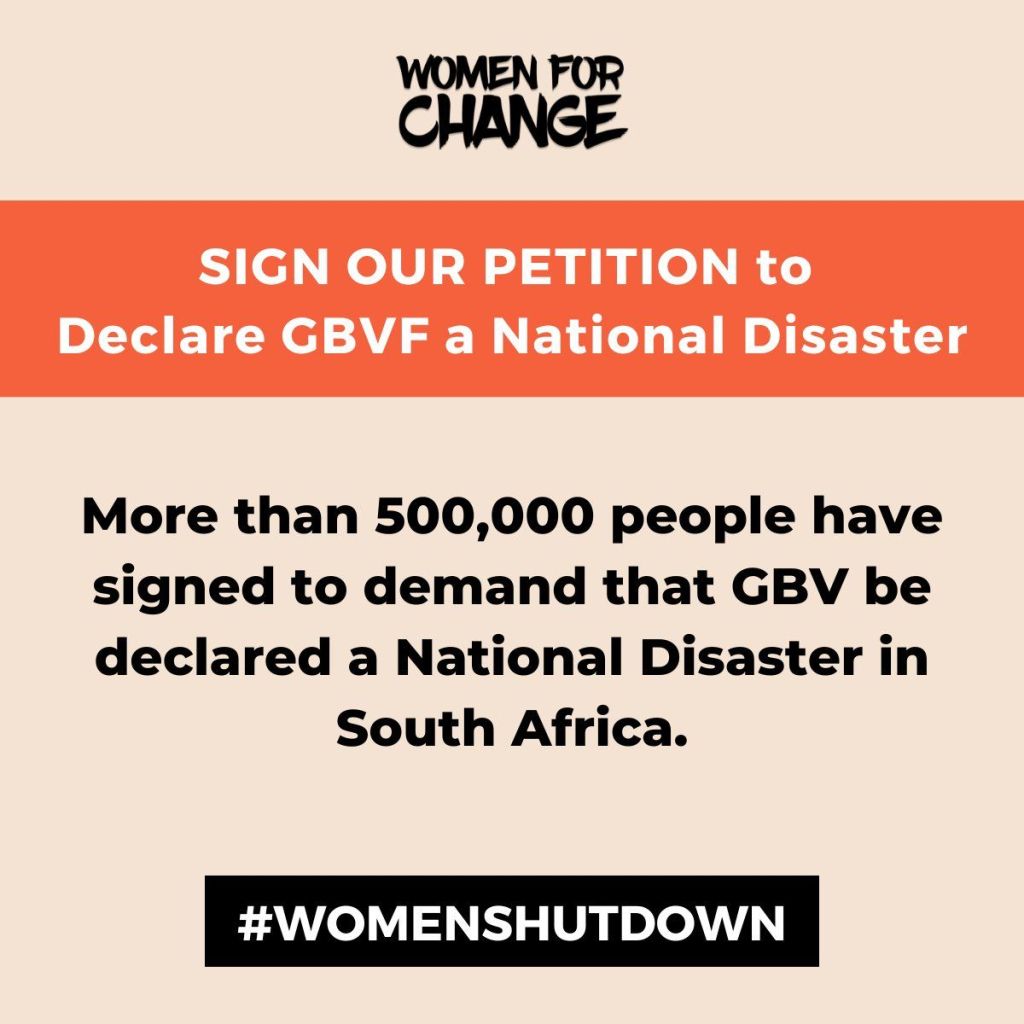
This is what Women for Change and countless survivors have been calling for, not symbolic recognition, but legal activation.

3. Why the Government Stopped at “Crisis” : We are confident that there are political reasons the state may prefer “crisis” over “disaster.”
A crisis:
- costs nothing,
- has no mandatory deadlines,
- avoids a formal admission of state failure,
- doesn’t disrupt normal governance,
- doesn’t force Treasury to release emergency funds,
- and doesn’t require measurable outcomes.
A disaster does all the above, instantly. So, although the President’s declaration is a step forward in language, it is not a step forward in law, governance, or resource allocation.
The Risk of Symbolism Without Structure : Women’s organisations have long warned the state against treating GBV as a matter of speeches without systems, and while the declaration of a crisis is not meaningless, symbolically, it is a shift but it remains a gesture, not a guarantee.
Without legal mechanisms, dedicated funding, and enforceable accountability, nothing changes for the woman trying to open a case at a police station that turns her away;
nothing changes for the girl whose abuser is released on warning;
nothing changes for the abused boy child and shelters that are full, underfunded, or nonexistent.
Crisis language cannot do what disaster law can.
Activists are clear in what’s needed, and if GBV is as devastating as the state now says, if it erodes the social fabric, undermines development, and destabilises communities, then surely it must be treated with the same urgency as pandemics, floods or infrastructure collapse. These are not political themes, they are operational needs, that only a National Disaster declaration obliges the state to meet them. I need us on lock-in on the use of language in such cases the fluidity of it does more harm than good.