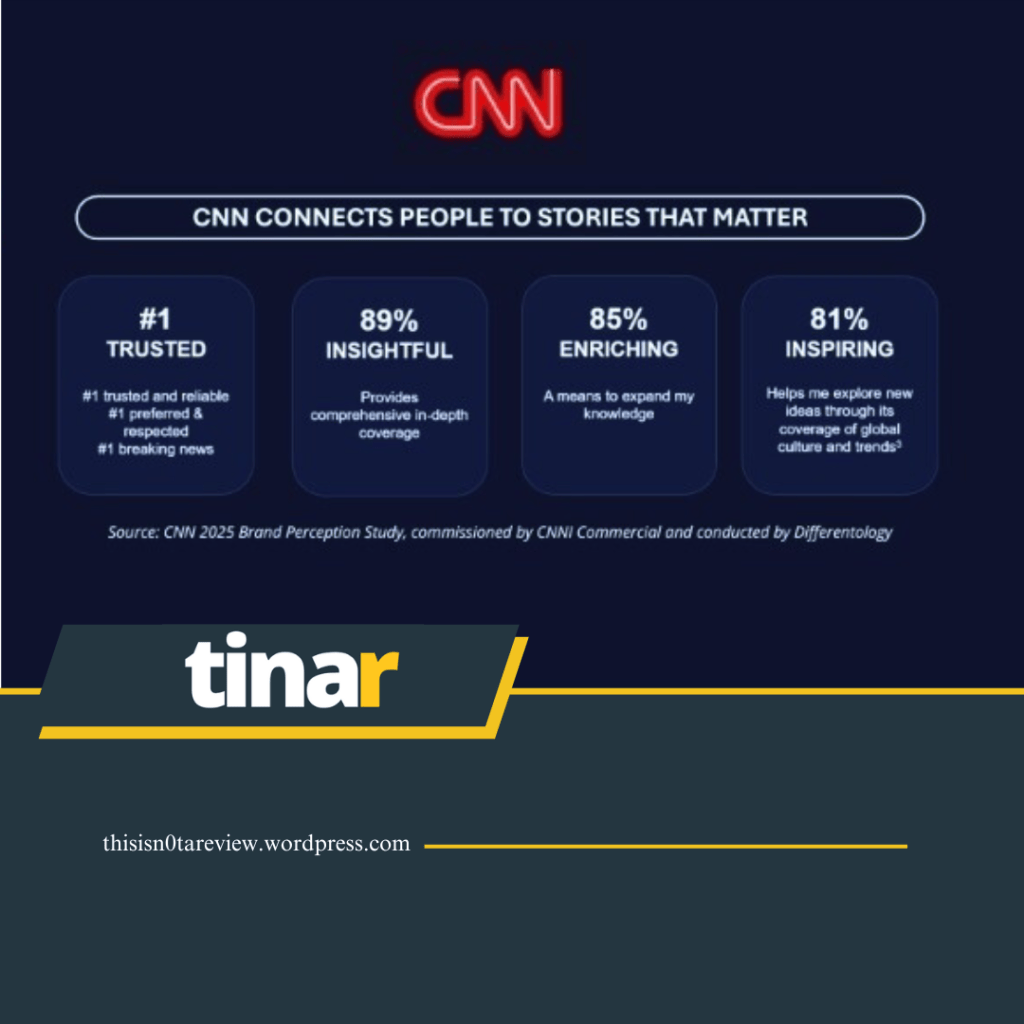
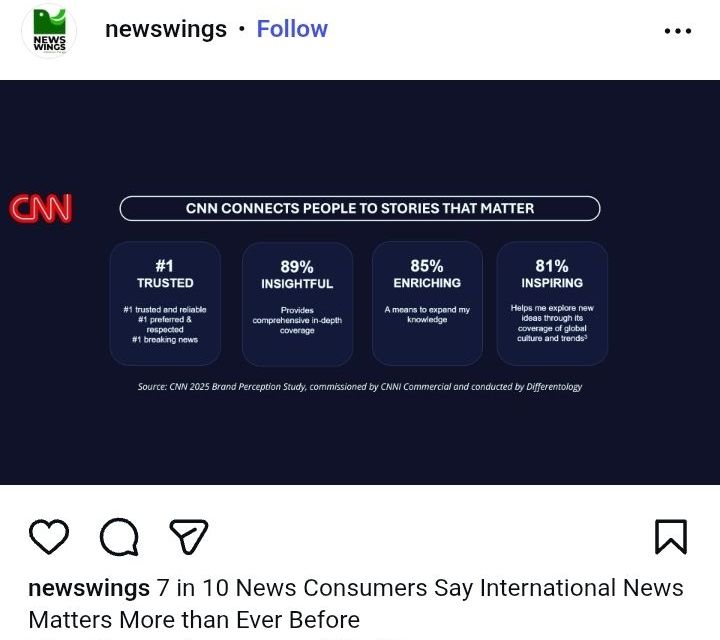
This is not a review, but if it were to be one, we’d have to start by asking a basic question: who is speaking, and who benefits? An article currently circulating under the guise of media insight: “Seven in 10 News Consumers say International News Matters More Than Ever Before”, reads less like journalism and more like a carefully laundered brand intervention.
The headline suggests public interest research. The body reveals something else entirely: CNN talking about CNN, to legitimise CNN, using research commissioned by CNN International Commercial.

This is where discernment matters.
On paper, the study is “conducted by an independent research company.” In practice, the narrative arc is unmistakable. Every tension resolves in CNN’s favour. Every statistic bends toward CNN’s authority. Every quote reinforcing trust, credibility and safety comes from CNN executives themselves. There is no competing voice, no industry comparison, no methodological scrutiny, and no acknowledgement that CNN, like all legacy media, has faced reputational erosion in the last decade.
This isn’t research informing the public. This is research performing reassurance. The language gives it away. Phrases like “That’s why CNN stands out”, “CNN aims to be a guide”, and “a safe and premium space for brands” belong in a sales pitch, not an editorial environment. This is a press release that collapses the distance between subject, narrator, and beneficiary, a classic PR tell. A gentle reminder is that : Journalism interrogates power. PR narrates it.
More revealing is the article’s true audience. Despite pretending to speak to “news consumers,” the final act is aimed squarely at advertisers. We are told that brands gain trust by advertising on CNN, that CNN enhances brand credibility, that it offers a “secure environment” for corporate messaging. This is not incidental. It is the point. Which raises the more questions: why now?
CNN, like many global news organisations, is navigating declining trust, fragmented audiences, platform dependency, and political scepticism, particularly outside the US and Europe. In South Africa, where audiences are already wary of Western media framing, institutional authority is not assumed; it is contested. Against this backdrop, publishing research that positions CNN as the antidote to misinformation, chaos, and distrust is not neutral. It is strategic.
This is what we mean by reputation laundering: when data, research language, and editorial tone are used to cleanse, stabilise, or rehabilitate a brand’s authority without transparent disclosure of intent.
While nothing here is outright false, the truth is not just about accuracy, it’s about context, framing, and power. The danger isn’t that CNN conducts research. The danger is when such research is peddled as fact-based insight rather than branded communication, and circulated through media platforms without being clearly labelled as advertorial or sponsored content.
That blurring erodes public trust further, ironically undermining the very credibility the article claims to defend.
For South African readers, this moment is instructive. We are inundated with “studies say” headlines, often sourced from organisations with vested interests. Media literacy today requires more than spotting misinformation; it requires spotting motivated information. When an institution tells you it is trustworthy, the correct response is not acceptance, it is interrogation.
- Why is this being said now?
- Who commissioned the research?
- Who interprets the findings?
- Who is missing from the conversation?
This is not about singling out CNN. It’s about recognising a wider media condition where journalism, marketing, and reputation management increasingly share the same costume.
When research becomes reputation laundering, the public’s role is not to consume, but to question.
And perhaps the most telling signal of all?: The article doesn’t end by inviting readers to think more critically about international news.
This was published on several online media platforms, including this CNN blog. It ends by inviting brands to buy into it. That alone tells us everything we need to know.


