
Having seen the response from Steers HQ, I feel that the response was solid, the accountability should now move from statement to structural consequence. We live in a time where corporate non-apologies and carefully worded deflections, so Steers’ response to the gardening incident stands out, not because it was perfect, but because it was clear.
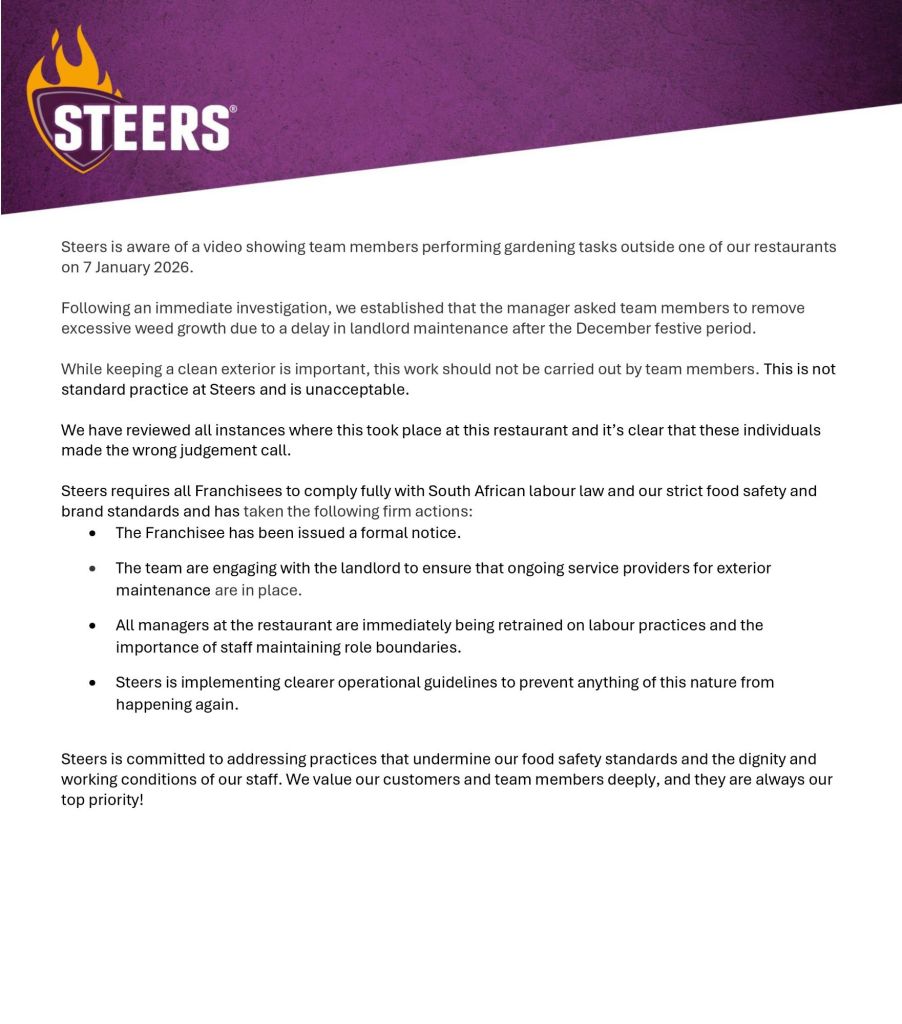
The company acknowledged wrongdoing. It named role boundaries, labour law, food safety, and managerial error. It did not minimise the issue or blame public misunderstanding. That matters.
But accountability doesn’t end at acknowledgment. It’s measured by what changes internally once the spotlight fades. If Steers wants this moment to mean something, the most constructive next step would be deceptively simple: demote the manager involved back to floor-level work as part of retraining. Not as punishment theatre, but as education.
Leadership roles require an understanding of power, consent, and dignity. When those are misunderstood, proximity to frontline labour is often the most effective corrective step. Training from above rarely substitutes for lived experience below. Demotion, paired with structured retraining and monitoring, would send a clear message: misusing authority is incompatible with leadership, not just brand optics.

Based on the response from HQ, Steers has already shown it understands the issue. Now, it has the opportunity to demonstrate that accountability is not symbolic, but operational, and that will need all the franchises to adhere to raising awareness, rebuilding safe working environments with highly trained management, kitchen staff, floor staff and the likes.


