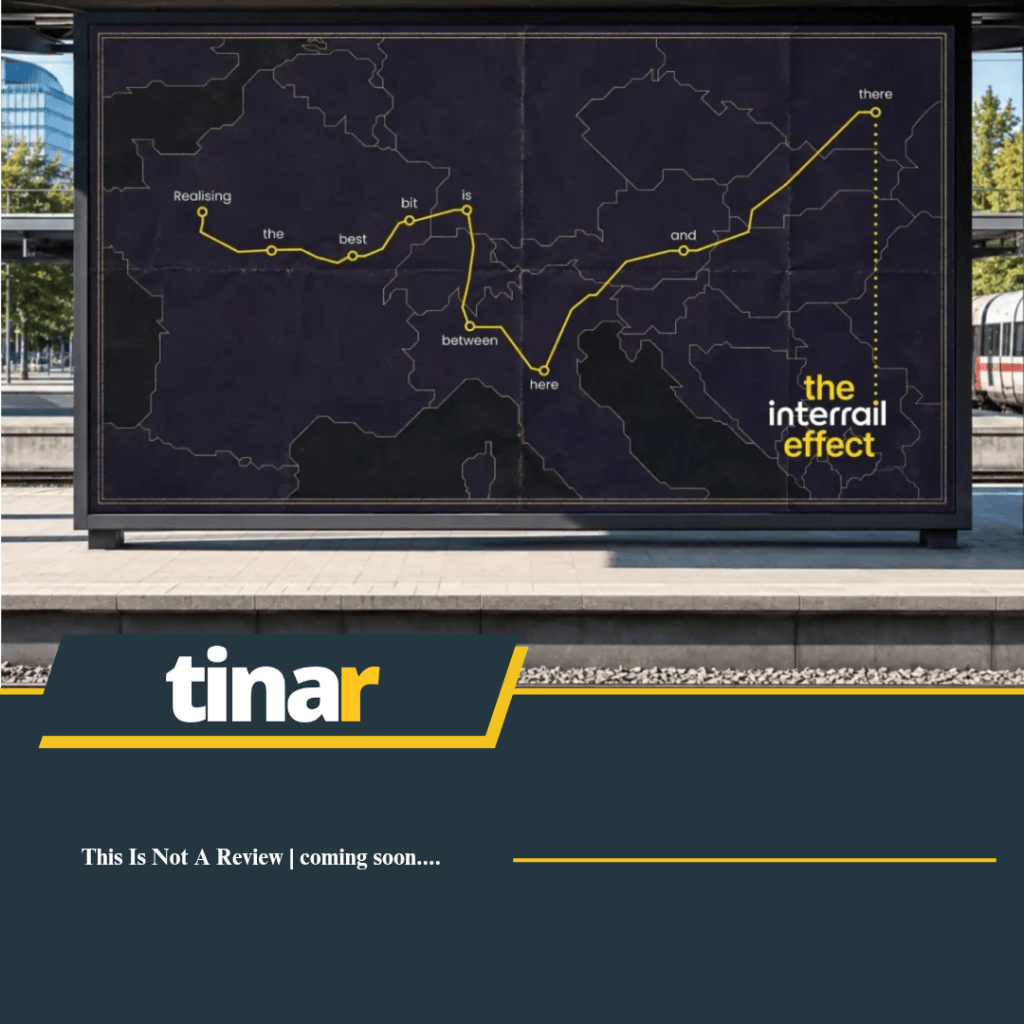
Interrail B.V., the Dutch company behind the Interrail rail Pass, has launched The Interrail Effect, a global brand platform built around a relatively simple proposition that travel does not only take people somewhere, it can change how they see the world, and themselves.
Commercially, if your brain is as tickled as mine, the more interesting part of the campaign is not the sentiment attached to travel, it is the architecture behind it. Interrail has taken creators, community, lived experience and user-generated content and placed them inside one long-term brand platform, rather than treating influencer marketing as a series of disconnected promotional posts.
The strategy begins with the consolidation of Interrail and Eurail into one global brand. Previously, the same rail Pass product operated under two identities: Interrail for people living in Europe and Eurail for travellers from outside Europe. With the Eurail Pass now becoming Interrail, the company is creating a single identity and community around a product that can take travellers across as many as 33 countries. The Interrail Effect then gives that unified business something larger to communicate. Interrail’s own customer research found that around 70% of customers said their trip changed how they see the world, with a similar proportion describing the experience as more impactful than other types of holidays. The commercial opportunity, therefore, is not simply to sell more train journeys, but to build a brand around what happens during them.
This is where the 30-creator campaign becomes particularly interesting. Interrail did not simply brief 30 creators to visit European destinations, produce a predetermined number of posts and move on to the next campaign. The creators were selected across different ages, backgrounds and travel styles, including solo travellers, groups, families, first-time travellers and experienced Interrailers from Europe, the United States, Canada and Australia. Their unfiltered footage, diary-style observations and personal reflections became campaign material, while their own Instagram, TikTok and other social platforms became additional distribution channels. The result is a content model in which the brand does not have to manufacture every story itself. It creates the conditions for stories to happen, then allows those stories to become part of the brand.
And if you look deeper into this, or think about it long enough, you can spot that there is a deliberate commercial reframing of what travel content is allowed to be. The missed connection, conversation with a stranger, unexpected friendship or scenery seen from a train window can become more valuable to the brand than another perfectly composed destination shot. Interrail calls this the positive friction of rail travel, the parts of the journey that cannot be completely controlled, but which often become the memories people carry with them. That gives the campaign an unusually useful content engine because every traveller potentially has another version of The Interrail Effect. Creator content can therefore keep feeding the platform, community experiences can generate new stories, and those stories can move between paid media, owned channels, PR, partnerships and the creators’ own audiences.

I am really tickled by this campaign because the bigger lesson for brands is that influencer marketing becomes commercially more interesting when the creator is not treated as the end point of the campaign. Interrail is building a framework in which creators can continue helping to develop The Interrail Effect, with future campaigns intended to draw on cultural moments, new voices and authentic storytellers. That moves the relationship from a transactional exchange which is often : post the product, deliver the impressions, campaign ends … towards an ecosystem in which the audience, creator, customer experience and brand narrative continuously feed one another. The rail Pass remains the product, but the community becomes the media, the journey becomes the content, and lived experiences become the proof of the brand promise. And This Is Not A Review but that is a much bigger commercial proposition than simply paying 30 people to post about a train ticket.


