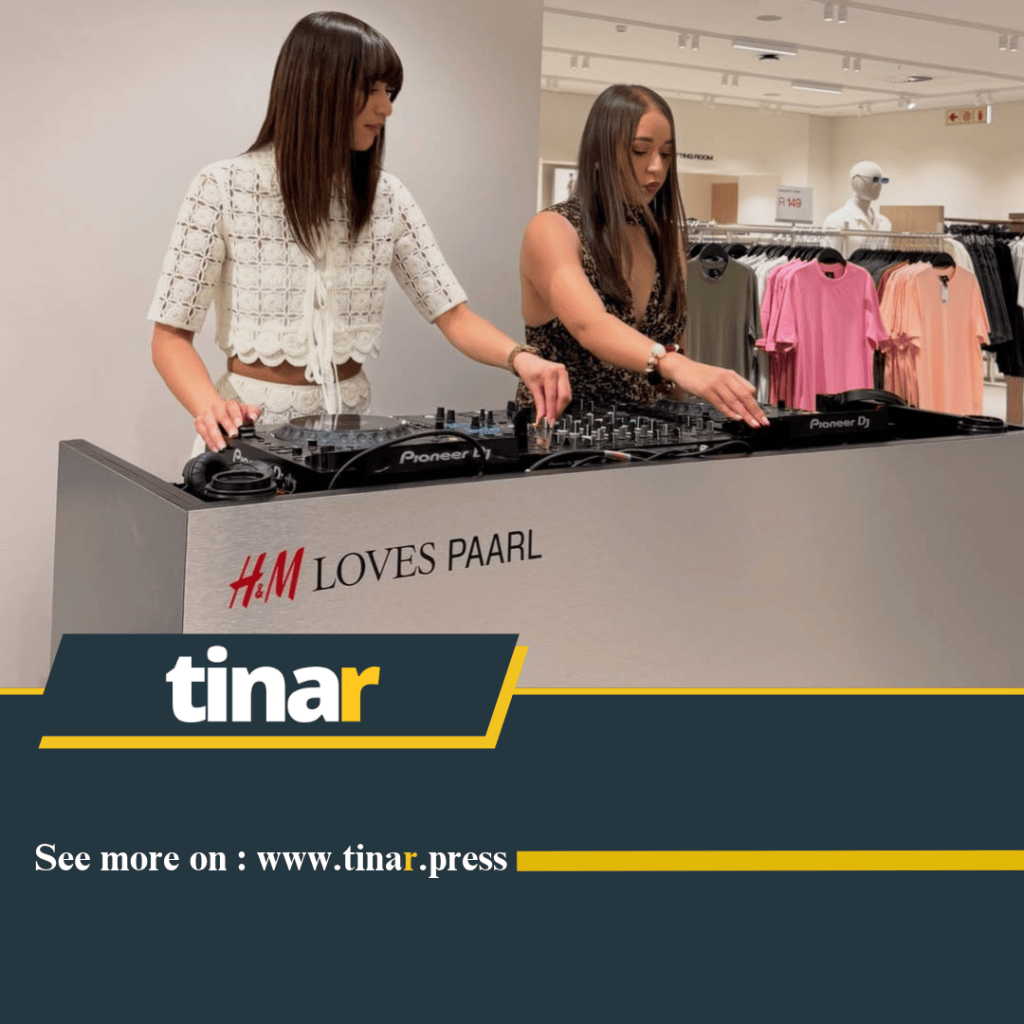
H&M has reached its 30th store in South Africa, opening its latest location at Paarl Mall in the Western Cape on 31 October 2026. Since entering the local market in 2015, the Swedish fashion retailer has steadily expanded its presence, with its latest +-1,831m² store creating 22 direct jobs. On the surface, this is another international retailer celebrating a local expansion milestone. However, the timing makes the development particularly interesting. H&M is growing its physical footprint while several established South African clothing retailers are navigating weaker consumer spending, rising operating costs and increased competition, a side eye at Shein and Temu. The question worth asking is what international retailers are doing differently, and what their expansion tells us about the changing expectations of South African shoppers.
The local retail environment is considerably more competitive than it once was. TFG, Truworths, Mr Price and Pepkor are competing not only against one another, but also against international fashion brands, online platforms such as Shein and Temu, and grocery retailers increasingly interested in the apparel market. Truworths has reported pressure on its African retail sales, while TFG has embarked on a store rationalisation programme, closing underperforming locations and reconsidering the economics of its physical footprint. This is an important conversation, having hundreds or thousands of stores does not automatically translate into a healthier retail business. Equally, opening new stores is not necessarily evidence of a winning strategy. Retailers have to continuously assess where their customers are shopping, what they are buying and whether their operating models remain commercially viable.
H&M’s proposition offers an interesting case study. Its product offering spans womenswear, menswear, childrenswear, homewear and accessories, supported by an internationally recognised brand and a presence in prominent shopping destinations. Its expansion also speaks to the importance of brand positioning, product variety and the overall shopping experience. But perhaps there is another part of the business worth examining: its people. In the comments section of Daily Investor’s original report, Mpho Mpholo, who identifies their experience with H&M as a retail leader, described the company’s employee culture as a highlight of their career. Mpholo contrasted H&M’s investment in its staff with what they characterised as exploitative and extractive practices in parts of South Africa’s retail sector. It is one person’s experience, rather than a sector-wide assessment, but it raises an important commercial question: how much does investing in employees contribute to the customer experience, staff retention and ultimately a retailer’s performance? Retail businesses sell products, but their employees remain central to how those products and brands are experienced.

That said, we should be careful not to mistake today’s expansion for a permanent guarantee of success. Retail markets are cyclical, consumer preferences change, operating costs fluctuate and even the most recognisable international brands can find themselves reassessing their store portfolios. A retailer opening its 30th store today may eventually need to close locations, consolidate operations or rethink its strategy tomorrow. We have seen established retail groups expand aggressively before later having to rationalise their footprints. Growth is encouraging, but sustainable growth requires more than a store-opening announcement. It requires a business to understand its market, respond to its customers, manage its costs and remain relevant as economic conditions change.
For South African retailers, the arrival of more international competition is always concerning when you look at the bigger scale of local production and our trailing textile industry, but yet, we are often encouraged to view international retailers as both a challenge and an opportunity to reassess the business. Local groups have established distribution networks, familiar brands, customer relationships and decades of experience navigating this market. Those are valuable assets, but they cannot be treated as permanent competitive advantages. The next phase of fashion retail will demand sharper pricing strategies, more responsive merchandise selection, stronger digital experiences and a better understanding of what today’s consumers value. H&M’s 30-store milestone is therefore more than an international brand’s expansion story, it is another reminder that the retail market is moving, and every player has to move with it.
The question is not simply who has the most stores, but who is building a retail business that customers and employees still want to be part of.


