
I think Shotta’s is hyper manosphere red-pill esq content, even if that was not the intention but there seems to be a type of man that has this song on repeat and it’s been nagging at me for a few days now, this is that deep, so as a brief breakdown, it feels to me like there is something particularly interesting about Season 25’s ‘Shotta’s’ and the way it packages its messaging. On the surface, it sounds like familiar advice between male friends, basic “your woman is playing you, stop being emotionally invested, don’t let her take advantage of you”.. simple right? Sound advice, right?. We’ve heard variations of this conversation in social circles, at a braai, in podcasts and across social media. But listen a little closer and the conversation starts to resemble something much more familiar… red-pill ideology dressed up as brotherly advice. The woman becomes a character to be discussed, assessed and dismissed, while the men position themselves as the ones who understand how women supposedly operate.
What makes this particularly interesting is how the song constructs its representation of women. Their value is repeatedly filtered through physical attractiveness, sexual appeal and what they can potentially extract from a man. There is little interest in women as individuals with their own motivations, circumstances or emotional experiences. Instead, the woman becomes a category… financially motivated, untrustworthy, emotionally reactive, manipulative or disposable. This is where the messaging moves beyond a man advising his friend to leave an unhealthy relationship. It begins reinforcing a worldview in which women are inherently suspect and male distrust is presented as common sense.
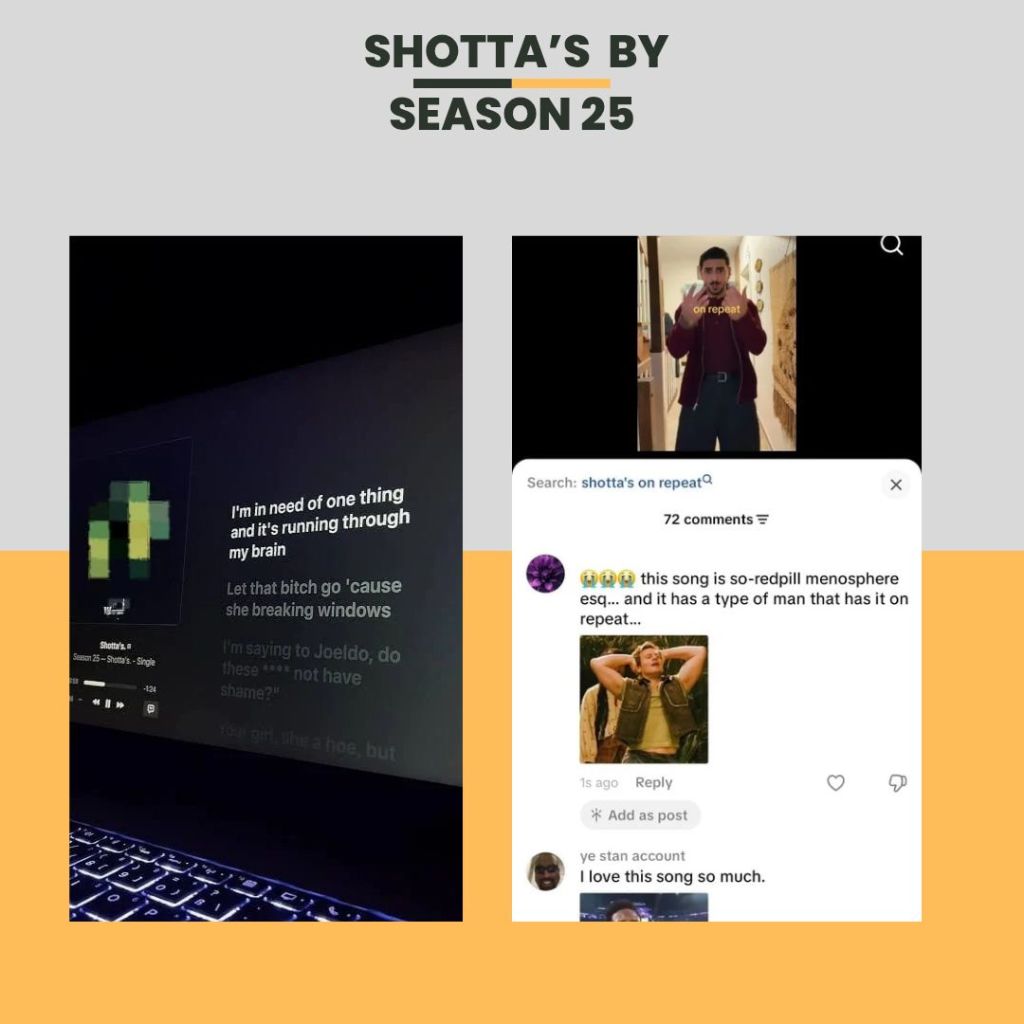
The manosphere has become particularly effective at circulating these attitudes because it doesn’t always introduce itself as an ideology. Sometimes it arrives as a podcast conversation, a TikTok clip, a motivational speech about masculinity or, in this instance, a song thats become catchy even to women. The format is often deceptively simple, one man explaining women to another man. The advice is framed as protection, as though men are sharing information that women don’t want them to know. In doing so, male solidarity is built around a shared suspicion of women. The brotherhood isn’t necessarily formed through mutual emotional support or personal development, but through a collective understanding that women are the problem. This type of misalignment (misogyny) becomes easier to consume when it sounds like someone looking out for his friend.
There is also an interesting contradiction around masculinity and emotional vulnerability. The man who is emotionally invested, affectionate or genuinely interested in maintaining a romantic relationship with a woman is positioned as someone who needs to be warned. Tenderness becomes something to laugh at rather than a quality worth appreciating. Emotional detachment, meanwhile, is elevated as a form of masculine intelligence. This is a familiar feature of red-pill culture, where men are encouraged to interpret vulnerability as weakness and relationships as negotiations in which somebody must maintain the upper hand. It raises an uncomfortable question about the kind of relationships being promoted, because if a man is taught to approach women with suspicion, how exactly is he expected to build a relationship founded on trust?
Perhaps the most revealing contradiction is that women remain central to this performance of masculinity. They are desired, pursued and incorporated into conversations about marriage, relationships and male success, yet their autonomy is frequently treated as an inconvenience. There is an appetite for female companionship without necessarily extending the same appreciation to women as people, and perhaps that desire is more related to the emotional labour women are able to perform in romantic relationships with these “aloof” men who dont necessarily like woman but know having a relationship with a woman is part of his social currency. The manosphere can create an environment in which men speak endlessly about wanting wives, loyalty and traditional relationships while simultaneously consuming content that encourages contempt for the very women they hope to partner with. Wanting a woman in your life and genuinely liking women are not necessarily the same thing.
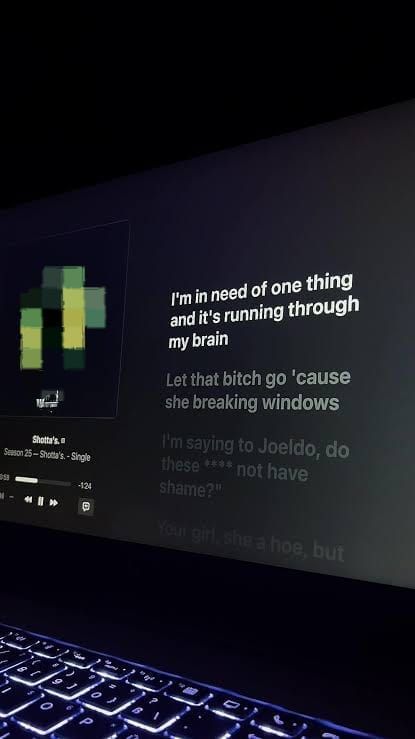
‘Shotta’s’ is an interesting cultural example because it demonstrates how attitudes towards women can be normalised through entertainment without requiring an explicit declaration of ideology. Not every listener will interpret the song in the same way, and before people come for me, enjoying a track does not automatically make someone a red-pill adherent. But the messaging is worth examining, particularly when we consider the kinds of male identities that find affirmation in it. I think there is a difference between a man who has been hurt in a relationship and one who turns that experience into a philosophy about women collectively, one is dealing with an individual experience, the other is building an identity around resentment. And perhaps that is the bigger conversation here on why advice between men becomes another vehicle for teaching men to perceive women as just objects.
NB: This is part of an ongoing series on TINAR around Social Commentary highlighting international & local realities of how people experience South African and Global men


