
The profile I wrote about former Georgian Prime Minister Bidzina Ivanishvili led me back to a recurring conversation I find myself revisiting whenever I become disheartened by how institutions, governments and those with economic power handle and preserve talent, art, design, sport and culture. Patronage is at the centre of this essay. This is not a review, but I hope it is a piece I finally get to publish with some degree of coherence. Otherwise, I can shamelessly claim it as an emotionally charged essay. I recall a time in our local history when I regarded Dr Precious Moloi-Motsepe as a patron of the textile and fashion design industry. As a reluctant creative whose interests sit somewhere between history, words, marketing and brand-building, I had grown fond of the idea of a successful Black person, becoming a patron of creative talent. There was something compelling about the possibility of Black wealth not merely being accumulated, but actively participating in the cultivation of Black creativity. Patronage is one of the oldest relationships between wealth and artistic expression. Long before artists could rely on galleries, publishing houses, streaming platforms, digital subscriptions or commercial sponsorships, many depended on patrons who financed their work, commissioned pieces or provided the resources necessary for them to create. A patron was not simply someone purchasing an artwork… patronage could mean making an artist’s livelihood, professional survival and creative output, possible.
The relationship was particularly visible during the European Renaissance, where patronage became deeply embedded in the production of art, architecture, literature and scholarship. Families such as the Medici in Florence are often associated with the financing and encouragement of artistic talent, while churches, aristocrats and political institutions commissioned works that communicated religious devotion, influence, prestige and power, another Tinar profile comes to mind; the Lizelle Kruger essay. For the artist, a commission could mean access to materials, a workshop, apprentices, time and a relatively dependable source of income. Artistic talent alone was not always enough to sustain a career, access to people with the means to fund that talent mattered enormously, and it still does. Patronage therefore functioned not only as financial support but also as professional access, helping artists build reputations, secure further commissions and become part of cultural networks. This is the historical context in which I began to appreciate Dr Precious Moloi-Motsepe’s association with fashion and the creative industry, particularly during the period between/approximately 2007 and 2017. I saw something aspirational in the idea of a wealthy Black woman deliberately occupying a space in which designers, fashion and creative enterprise could receive attention, support and opportunity.
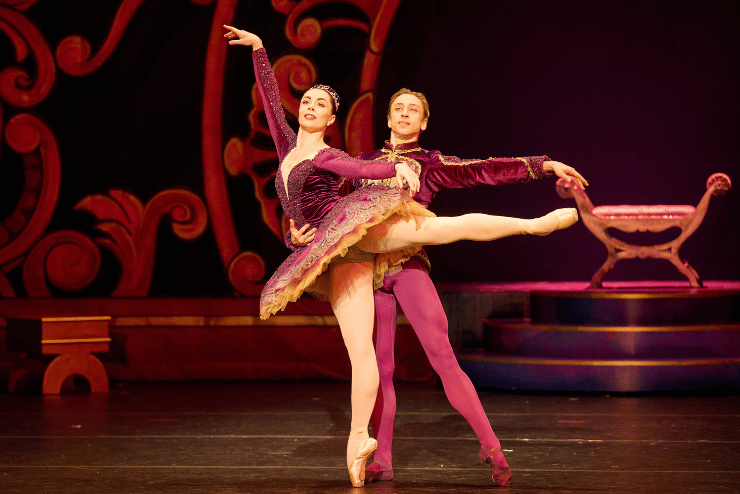
But historical patronage was not necessarily an easy and wholesome arrangement in which wealthy individuals generously funded artists without expectations. If you have even a passing interest in the arts, you may associate patronage particularly with European artistic traditions, including the ballet and visual arts, where wealthy benefactors, aristocrats and institutions played significant roles in the commissioning and development of creative work. Patrons could influence what was produced, the subject matter, the scale, the materials and even the ideological messaging of a work. An artist receiving financial support could find themselves working within the tastes, religious convictions, political ambitions or personal preferences of their benefactor, those relationships could often be unequal because the patron held the financial leverage, unfortunately patronage could simultaneously provide an artist with the resources to work and create while there is a pressure to accomodate the person financing that work. Yet despite these complexities, it established an important economic relationship between creative talent and those with the means to support it. As the creative industries evolved and art, performance, literature and design became increasingly subject to commercial distribution, public taste, sales and market competition, patronage offered another possibility… the artist could be supported because someone valued their contribution, rather than exclusively because their work was commercially profitable. It was not a guarantee of creative freedom, but it could create room for experimentation, unpopular ideas, niche audiences and work that might otherwise struggle to find commercial viability. This remains relevant in a contemporary creative economy where visibility, monetisation and commercial performance often determine which talent gets the opportunity to survive.
Perhaps this is why I find myself revisiting the concept of patronage, particularly in the context of Black wealth in South Africa. We have spent generations confronting the exclusion of Black people from wealth, ownership, institutions and the economic opportunities that allow cultural legacies to flourish. The historical consequences of those exclusions are not abstract, they are visible in the inequalities that continue to shape access to resources, infrastructure, education, cultural preservation and creative opportunity. Yet as a portion of Black South Africans has accumulated considerable wealth, I find myself increasingly disheartened by how little visible enthusiasm there appears to be for cultivating a sustained culture of patronage. There is no shortage of public visibility when it comes to Black wealth, we see the luxury homes, expensive vehicles, convoys, exclusive celebrations, entertainment establishments, fashionable social circles and lifestyle spectacles that accompany financial success. None of these things is inherently wrong. People are entitled to enjoy the fruits of their labour, and Black economic success is necessary, deserved and long overdue. But when conspicuous consumption becomes the dominant public-facing narrative of an emerging wealthy class, I cannot help but question what else that wealth is building. Where are the patrons deliberately financing emerging painters, sculptors, musicians, writers, fashion designers, theatre practitioners, filmmakers, cultural archivists and sporting talent? Where are the individuals commissioning work, establishing artist residencies, funding studios, purchasing collections, supporting independent creative institutions or providing young designers with the capital to produce, manufacture and commercialise their first collections? We seem considerably more accustomed to celebrating the spectacle of Black wealth than interrogating its cultural contribution.
The frustration becomes even more pronounced when we consider the precarious conditions under which South African talent continues to operate. The recent swimming saga involving an athlete who will now represent another country is a reminder of the complicated relationship between talent, opportunity, infrastructure and professional prospects. It would be simplistic to attribute an athlete’s decision to a single funding issue, but the broader question of how we nurture and retain talent remains unavoidable. The same frustration arises when funding decisions within the Department of Sport, Arts and Culture place creative programmes under pressure, or when emerging fashion designers possess the talent, vision and ambition but lack the capital, production infrastructure, commercial networks and investment necessary to scale. We have talent. We have people capable of producing exceptional work, competing internationally, building brands and contributing meaningfully to our economy and cultural identity. Yet the responsibility of nurturing that talent is repeatedly left to strained institutions, individual creatives, small businesses, families and those operating with considerably fewer resources. I once regarded Dr Precious Moloi-Motsepe through the lens of what Black patronage could look like in South Africa. My perception of that visibility has since changed, and I find myself less convinced by the populist-facing nature of what I increasingly see. This is a personal observation, not a dismissal of every contribution she has made or an assertion that her work has no value, this just merely speaks to a broader disappointment with how patronage is represented and sustained. Patronage should not be reduced to campaigns, fashionable appearances, celebratory events or the optics of associating oneself with talent. It should translate into material support, commissions, access to markets, financing, infrastructure and opportunities that remain available after the applause has subsided. There is a difference between being seen supporting the arts and building a culture in which artists can actually afford to continue making art.

Perhaps Black South Africa needs to reconsider the patron as a cultural figure, not merely a wealthy individual but someone who understands that wealth can participate in shaping the cultural inheritance of a nation. Imagine Black billionaires and millionaires deliberately building art collections that prioritise emerging South African artists, financing independent publishing, establishing fashion production funds, supporting theatre, funding sporting academies, commissioning music, investing in cultural archives and helping creative businesses survive beyond their first collection, exhibition or performance. Imagine patronage becoming as aspirational as owning another luxury property, attending another exclusive event or acquiring another status symbol. Consumption creates personal enjoyment, but patronage can create opportunity, livelihoods, institutions and legacies. We do not lack talent apha, we are constantly discovering it, celebrating it and sometimes watching it find opportunity beyond our borders. What is disappointing is the apparent indifference of those who possess the financial means to meaningfully participate in nurturing that talent but choose not to. New wealth is not inherently a problem, but wealth that has the capacity to build, preserve, finance and cultivate yet appears largely invested in the spectacle of its own success represents a profoundly disappointing expression of economic advancement. We were historically denied the opportunity to build, own, commission, preserve and determine our cultural legacies on our own terms. To acquire wealth in a society shaped by those exclusions and then reproduce a culture of consumption without a corresponding appetite for cultural investment is an opportunity squandered. We should be aspiring to more than luxury displays and social spectacle. We should be building galleries, studios, archives, fashion houses, theatres, academies, publishing platforms, production facilities and opportunities that outlive us. The patron is not an outdated figure, the patron is a missing conversation in contemporary Black wealth. And those who have the means to do more, who could meaningfully contribute to the survival and development of South African talent but choose to invest almost exclusively in the spectacle of their own success, are, in my view, a profoundly disappointing class of new money.


