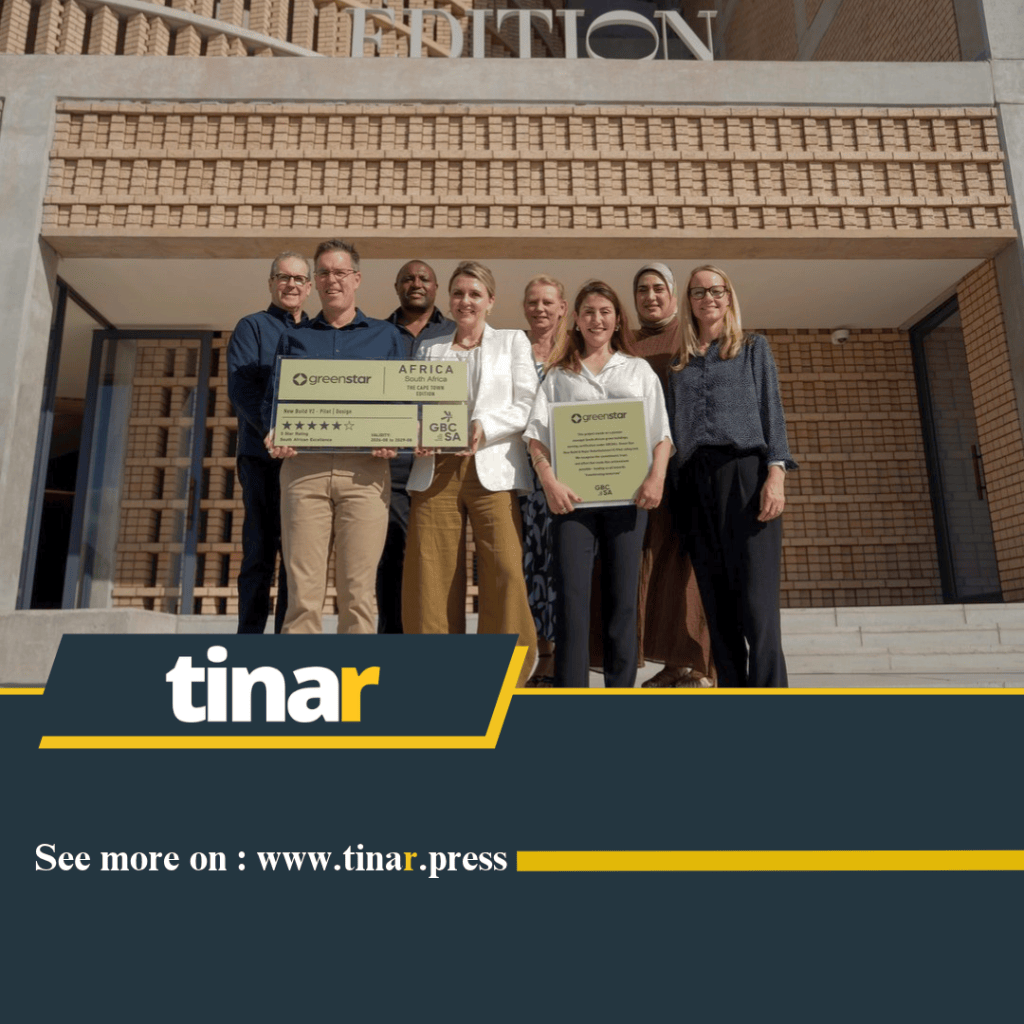
The V&A Waterfront has secured two 5-Star Green Star SA design ratings for its hospitality developments, with Cape Town EDITION and InterContinental Table Bay recognised for their planned environmental performance and connection to shared sustainability infrastructure across the precinct.
The two hotels are among the first four South African projects to be certified under the Green Building Council South Africa’s (GBCSA) New Build & Major Refurbishment V2 Pilot tool. Cape Town EDITION scored 52 points and InterContinental Table Bay 55, both comfortably exceeding the 35-point threshold required for a 5-Star rating.
The certifications highlight an approach to sustainable development that extends beyond individual buildings. Both properties benefit from infrastructure developed by the V&A Waterfront to support more efficient water, energy and cooling systems across the precinct, demonstrating how shared resources can contribute to the environmental performance and resilience of individual developments.
Three key systems underpin this approach. The Waterfront’s desalination plant on East Pier produces enough potable water to meet more than 80% of the precinct’s monthly water requirements, reducing dependence on Cape Town’s constrained municipal supply. Its district seawater cooling system uses seawater heat exchangers to remove heat from air-conditioning systems serving Victoria Wharf, InterContinental Table Bay and Cape Town EDITION, allowing chillers to operate more efficiently than comparable standalone systems. In addition, renewable electricity generated off-site is transmitted to the precinct through wheeling agreements, supplying up to 70% of its annual energy requirements.
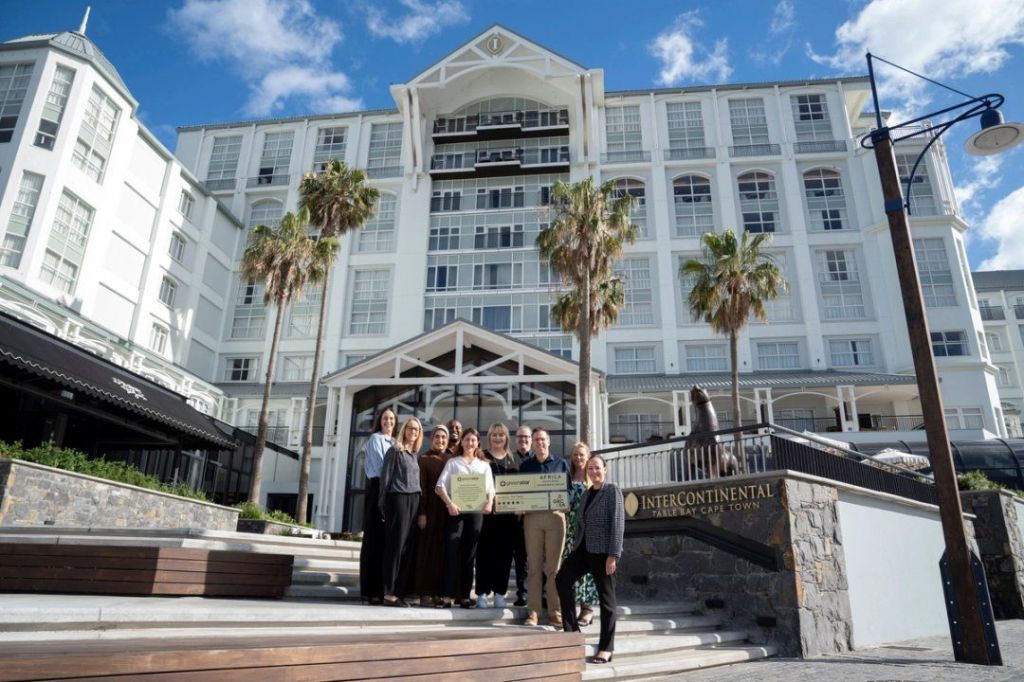
The two certifications also reflect different approaches to development. At InterContinental Table Bay, an 18-month refurbishment retained the building’s original core framework, brickwork and façade, avoiding much of the embodied carbon associated with demolition and rebuilding. Mature trees and plants were relocated and reused, while materials from the project were redirected towards alternative uses. Carpets were donated to community partners, including Astra School for Learners with Special Educational Needs, and thousands of square metres of paving were prepared for reuse elsewhere in the precinct. Although the project aimed for net-zero construction waste, this was not fully achieved due to limited industry capacity to process the volumes involved.
Cape Town EDITION, meanwhile, was designed from the outset to connect to the Waterfront’s existing infrastructure. Design-stage modelling estimates a 75% improvement in water performance against the Green Star baseline, including the benefit of desalinated water, and a 43% improvement in energy performance before off-site renewable electricity is considered. The development also incorporates design decisions intended to reduce its environmental footprint, including post-tensioned concrete slabs selected for their lower embodied carbon, exposed concrete and brickwork to limit additional finishes, and provisions for indoor air quality, natural daylight, acoustic comfort and sustainable mobility. These figures remain design-stage estimates, with actual consumption to be measured once the building is fully operational.
According to V&A Waterfront CEO Graham Wood, the precinct has invested in water, cooling and energy infrastructure for more than a decade, allowing individual developments to benefit from systems that would be difficult for a single building to justify independently. GBCSA CEO Georgina Smit also highlighted the importance of the Waterfront’s long-term approach to precinct development, recognising its wider environmental and social ambitions, as well as the collaboration involved in developing and testing the next generation of Green Star rating tools.

For the tourism sector, the certifications strengthen the Waterfront’s responsible tourism proposition by showing how sustainability can be built into the destination itself, rather than treated as an isolated responsibility for individual hotels. Visitors access premium hospitality supported by shared infrastructure designed to reduce resource demand and improve resilience, while the developments contribute to a broader precinct-wide sustainability strategy.
Both hotels received their ratings at the design certification stage, following an independent assessment of their design documentation. Each project must still achieve As Built certification within three years to confirm that the sustainability measures assessed during the design phase have been delivered. The latest ratings bring the V&A Waterfront’s portfolio to 30 Green Star-rated buildings and support its commitment to ensuring that all major new developments achieve at least a 4-Star Green Star rating.


