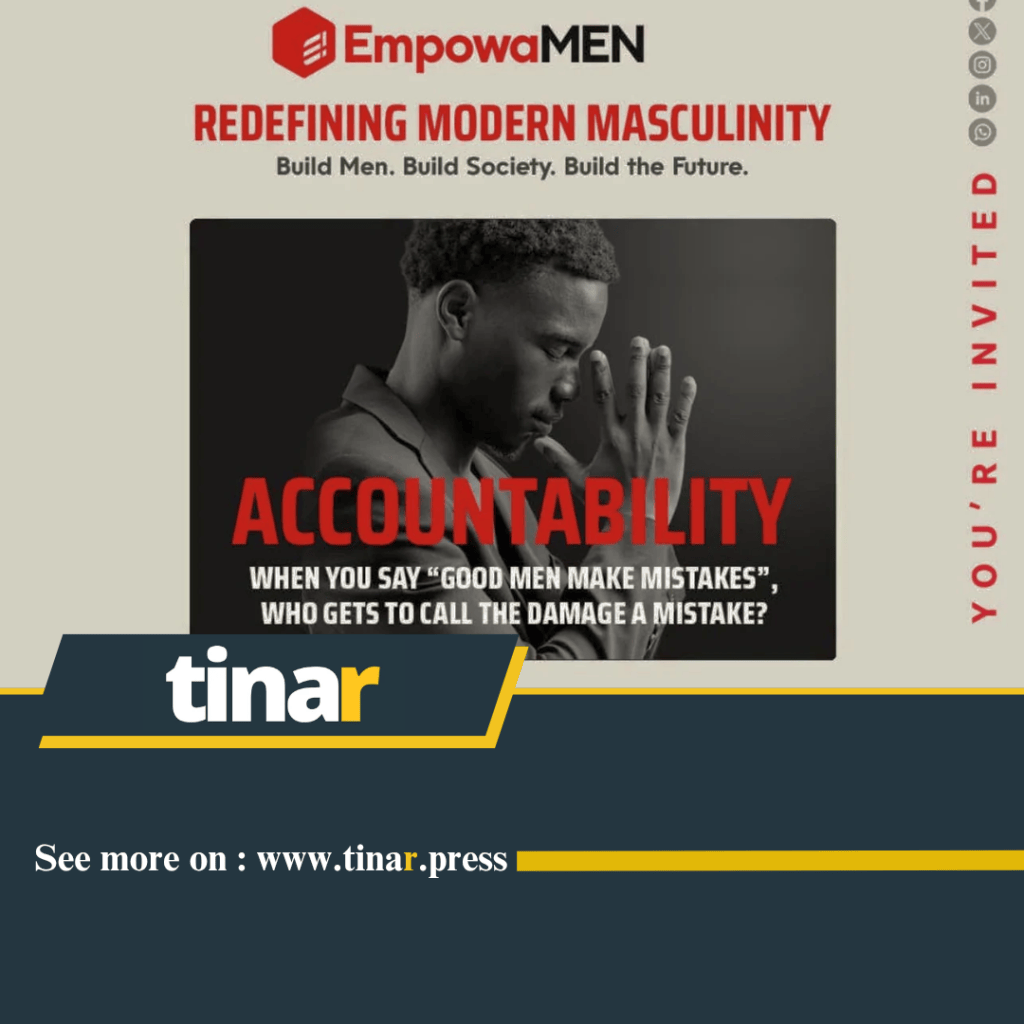
Falling into a rabbit hole and noticing that there is something worth appreciating about EmpowaMEN’s ambition to bring 4,000 men together for its International Men’s Day Summit on 28 November 2026. These past few years has grown tougher for the boy-child’s holistic development and this year has proven to be a time when conversations about masculinity, male identity, emotional wellbeing and men’s responsibilities in society are increasingly important, creating a space for men to engage with these subjects is a worthwhile undertaking, and what particularly deserves recognition is the decision to make general admission complimentary for men aged 18 and older. Access to conversations, expertise and perspectives that could contribute to someone’s personal and professional development should not always come with a financial barrier. For young men who are studying, unemployed, entering the workforce or simply unable to afford a R950 conference ticket, this is an opportunity to participate without having to justify the expense. That accessibility deserves credit.
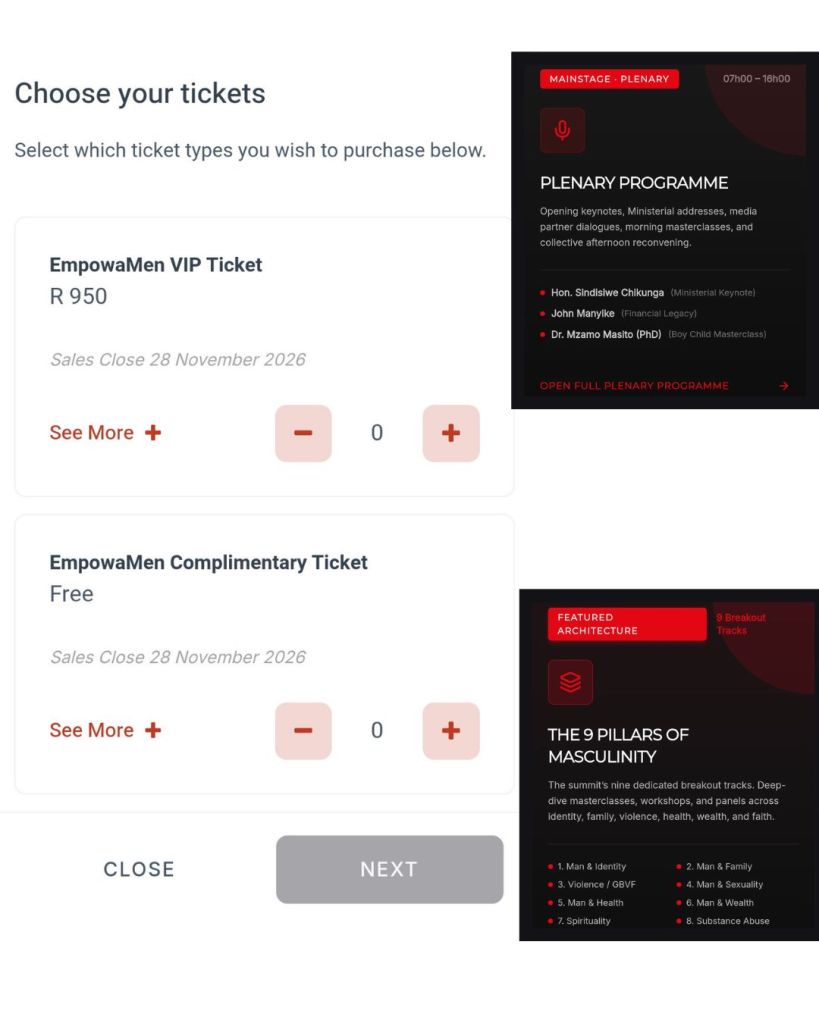
The ambition becomes even more apparent when looking at the programme. With 52 confirmed speakers, multiple content streams, masterclasses, networking opportunities and discussions spanning mental health, emotional wellbeing, fatherhood, financial empowerment, leadership, relationships and gender-based violence and femicide (GBVF), there is clearly an attempt to approach masculinity from several dimensions. These are not insignificant subjects, nor are they conversations that exist independently of one another. How men understand themselves influences how they relate to others, how they approach romantic relationships, companionship, fatherhood, how they manage conflict, how they participate in the economy, the home and how they exercise leadership. There is considerable value in bringing different specialists and perspectives into the same conversation. However, looking at the breadth of the programme and the scheduled 07:00 to 17:00 event, I find myself wondering whether one day provides enough room for all this knowledge to be meaningfully explored.
My concern is not necessarily the number of speakers, but what happens when so many important conversations are compressed into a limited amount of time. A keynote can introduce an idea, a panel can challenge an assumption and a masterclass can offer practical insight, but learning also requires time to process information, ask questions, reflect and make connections between what has been heard and what is happening in one’s own life. For a young man encountering discussions about emotional intelligence, financial responsibility or healthy relationships for the first time, exposure to information is only the beginning. There needs to be room to sit with uncomfortable questions still within access of the speakers and thought leaders of the summit, revisit difficult subjects and understand how to translate new perspectives into everyday behaviour. We should be mindful not to confuse the number of speakers an event accommodates with the depth of learning its participants receive. An impressive gathering is one thing, an experience that equips people to do something differently is another.
Perhaps there is an opportunity to extend EmpowaMEN Summit beyond the summit itself. I would have loved to see this developed into a three-day conference, with dedicated sessions and workshops that allow individual themes to receive more attention. Alternatively, imagine a three-month development programme that begins with the November summit and continues through December and January. Each month could focus on a different dimension of personal development, supported by smaller workshops, facilitated conversations, mentorship and practical assignments. Participants could return to these discussions, share their experiences and engage with specialists beyond the initial presentation. A structured programme could even conclude with certificates of completion for participants who fulfil defined learning and participation requirements. And if this is something in the works, which I missed while combing through the website, I believe this would give the initiative an opportunity to build continuity, measure engagement and create a more sustained relationship with the men it hopes to empower at the summit and through the summit.
I am of the belief that there is something valuable about investing in young men as learners rather than treating them simply as an audience to be addressed. We often speak about the need for men to become more emotionally aware, financially independent, accountable in relationships and active in building safer communities. EmpowaMEN seeks to be one of the structures that support men in developing these capabilities. Not every young man has access to mentors, professional networks, financial literacy programmes or environments where he can openly explore questions about identity and responsibility without feeling judged. Initiatives such as EmpowaMEN can help bridge some of those gaps. Which brings me back to the complimentary admission model as something that opens the door, continued learning, mentorship and practical development could make that opportunity even more meaningful. It is worth considering how corporate partners, educational institutions and specialists could help sustain such a programme beyond the annual gathering.
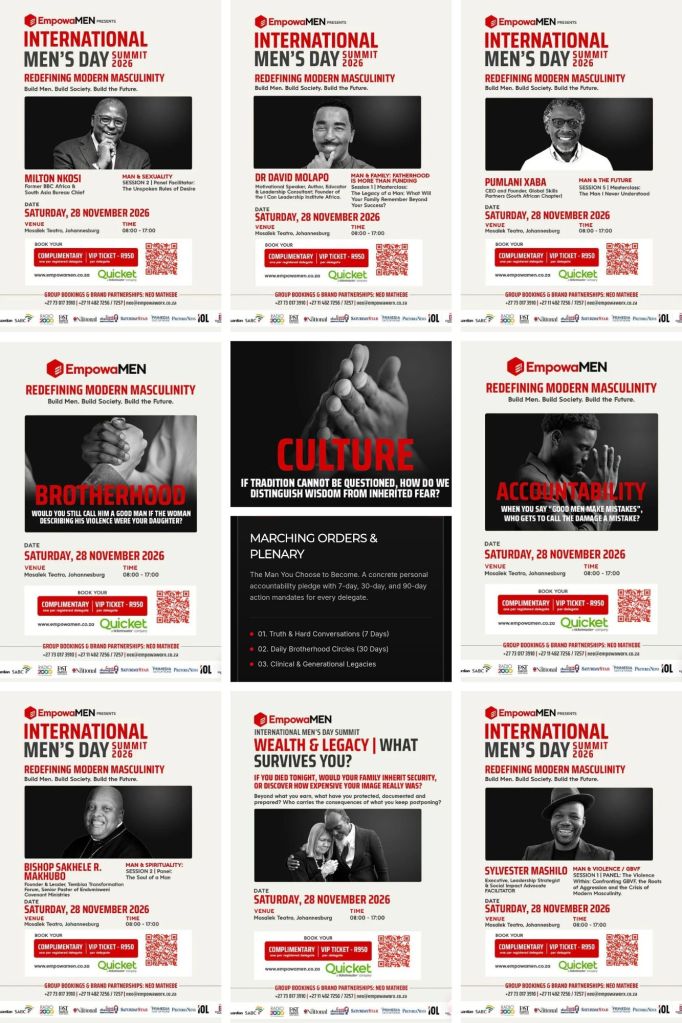
EmpowaMEN has an interesting opportunity here. Bringing 4,000 men both young and old together and assembling 52 speakers is an ambitious undertaking, the greater measure of success lies in what those men carry beyond the venue. If the ambition is to redefine masculinity, are we creating an event where men hear about transformation, or a programme where they have the time, support and opportunity to practise it? I would love to see this initiative continue to grow into something that gives men not only access to important conversations but also the tools, guidance and continuity to apply what they learn. Because getting 4,000 men into one room is an achievement. Helping 4,000 men leave better equipped to contribute to their families, relationships, workplaces and communities is an even more meaningful ambition. The conversation deserves to continue long after 28 November and start planting seeds of growth for the boy child who was said to be left behind …


