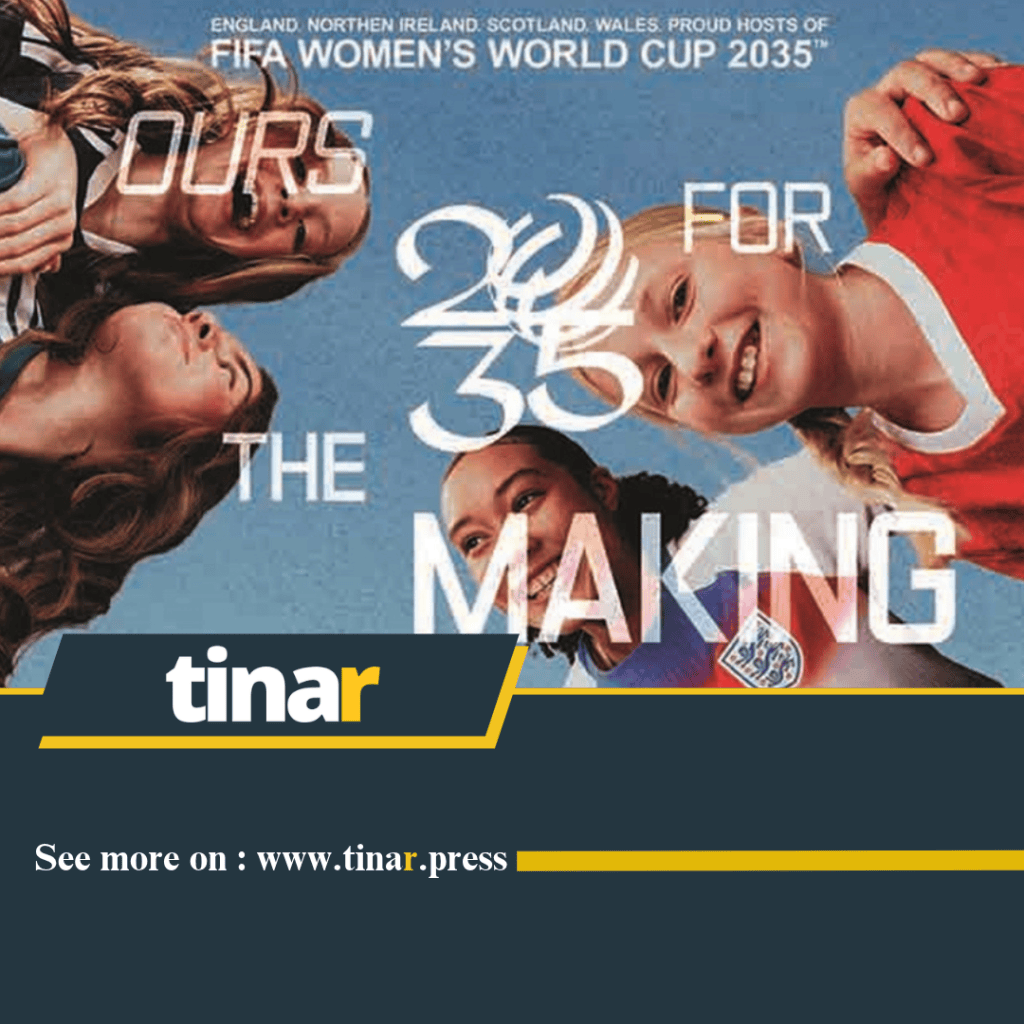
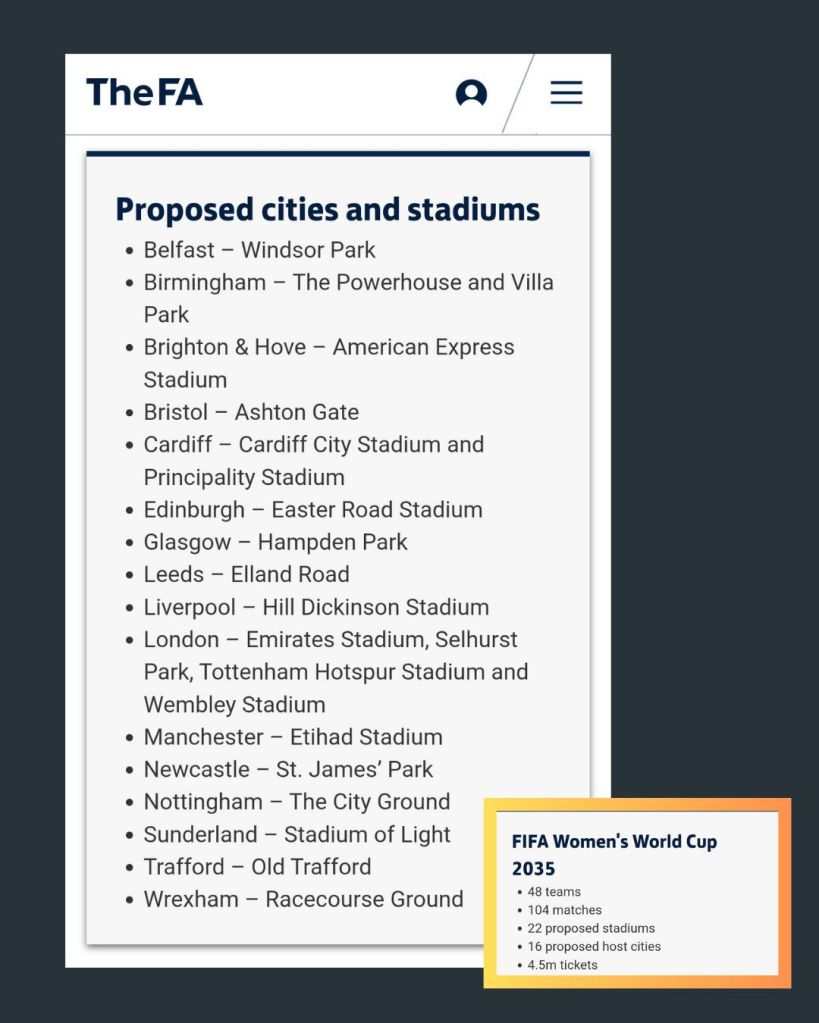
The United Kingdom has officially secured hosting rights for the FIFA Women’s World Cup 2035, bringing together England, Scotland, Wales and Northern Ireland for what is expected to become the largest single-sport event ever staged in the UK. The decision, announced following FIFA’s Extraordinary Congress in Zurich on 23 November 2026, marks another significant milestone in the commercial and global development of women’s football. With roughly 48 teams, 104 matches, 39 days of competition and 16 proposed host cities, this is considerably more than a sporting occasion. It is a major international marketing, tourism and investment opportunity, with the potential to put women’s football in front of audiences on an extraordinary scale.
The bid, built around the vision of ‘All Together’, is particularly interesting because its ambitions extend well beyond the tournament itself. The UK associations are anticipating approximately 4.5 million ticket sales and a global television audience of 3.5 billion. Those numbers represent an enormous opportunity for broadcasters, sponsors, tourism operators, hospitality businesses, merchandise retailers and brands looking to associate themselves with the continued growth of women’s sport. This is not a review, but lets extend the chat a little bit because there is also something important happening from a branding perspective. As women’s football is increasingly being positioned as a major commercial property in its own right, rather than a secondary offering attached to the men’s game. A World Cup of this scale creates opportunities to develop new audiences, build brand loyalty, attract investment and establish lasting relationships between businesses and women’s sporting communities.
However, perhaps the most interesting part of this announcement is not the projected audience or the number of stadiums. It is the eight-and-a-half-year development window between securing the hosting rights and welcoming the world in 2035. The four football associations have identified three key legacy priorities: improving access to football for girls and under-represented communities, developing coaching, officiating and leadership opportunities, and attracting more investment into women’s football from grassroots level through to the professional game. Their joint statement makes an important observation: the players who will take the world stage in 2035 are currently playing in parks and playgrounds. In other words, the future tournament cannot be separated from the development work happening today. It requires facilities, coaching, competitive opportunities, professional pathways and the institutional commitment to ensure that young girls have somewhere to go with their sporting ambitions.
And perhaps that is a conversation worth bringing closer to home. South Africa has no shortage of women with the talent, determination and ability to compete on international sporting stages. Our women’s football has already demonstrated its potential, but talent alone cannot sustain a sporting industry. There needs to be deliberate planning, investment in development structures, accessible facilities, stronger grassroots programmes, professional opportunities and marketing strategies that give women’s football the visibility and commercial attention it deserves. Government, particularly the Department of Sport, Arts and Culture, alongside the relevant sporting federations and development partners, agencies and corporations, should be looking beyond the next tournament or qualification campaign. Hosting rights are not the starting point for investing in women’s sport, they are the reward for having built something worth showcasing. If South Africa wants to remain competitive and grow its presence in women’s football, the planning must happen now, not when another major tournament is around the corner. The girls who could represent the country in 2035 are already out there. The question is whether our institutions are building a sporting environment that will give them a genuine pathway to get there.


